MERCREDI 24 SEPTEMBRE 2025 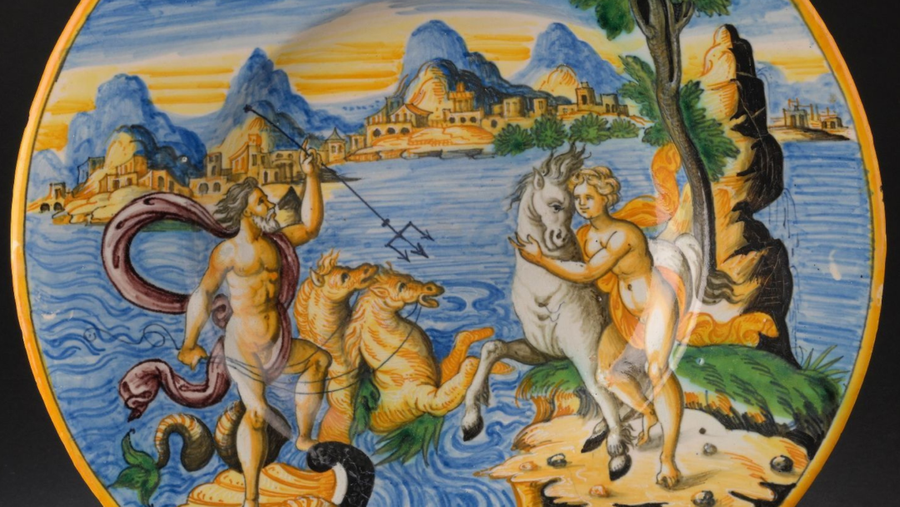
Majolica Treasures at Auction
O n 24 September 2025, Nouel & Associés will present at the Hôtel Drouot an exceptional collection of Italian and French majolica dating from the 15th to the 18th century.
Originating in Spain and introduced into Italy as early as the 13th century, majolica reached its height during the Renaissance, when the workshops of Faenza, Urbino, Deruta, Montelupo and Venice competed in virtuosity. Their technique produced a brilliance and vibrancy of colour that remains unmatched. Above all, it was their decorative repertoire — a istoriato, a quartieri or a trofei — that transformed these ceramics into works of art in their own right.
The collection includes albarelli, pharmaceutical jars, dishes and vases decorated with mythological, heraldic and ornamental motifs, some comparable to pieces preserved in major museum collections. It reflects both the decorative inventiveness of the Italian workshops and the expansion of tin-glazed earthenware across Europe.
Among the highlights of the collection are a 15th-century Deruta albarello painted with a dragon and a bird (est. €10,000–15,000), comparable to examples in the Louvre and the Museo Internazionale delle Ceramiche in Faenza; a Nevers dish, circa 1560, showing Neptune in his marine chariot (est. €5,000–8,000); a Venetian tondo, circa 1580, depicting the episode of Mucius Scaevola (est. €6,000–8,000); and a Castel Durante albarello dated 1580, with a pharmaceutical inscription and heraldic device (est. €4,000–6,000).
This selection illustrates the virtuosity of Italian and French workshops, which combined technical mastery with decorative invention, offering collectors a rare panorama of the golden age of majolica.
This sale highlights the art of the most gifted ceramic painters, who chose faience as their medium of expression, granting majolica its status as an art form in its own right.
The collection includes albarelli, pharmaceutical jars, dishes and vases decorated with mythological, heraldic and ornamental motifs, some comparable to pieces preserved in major museum collections. It reflects both the decorative inventiveness of the Italian workshops and the expansion of tin-glazed earthenware across Europe.
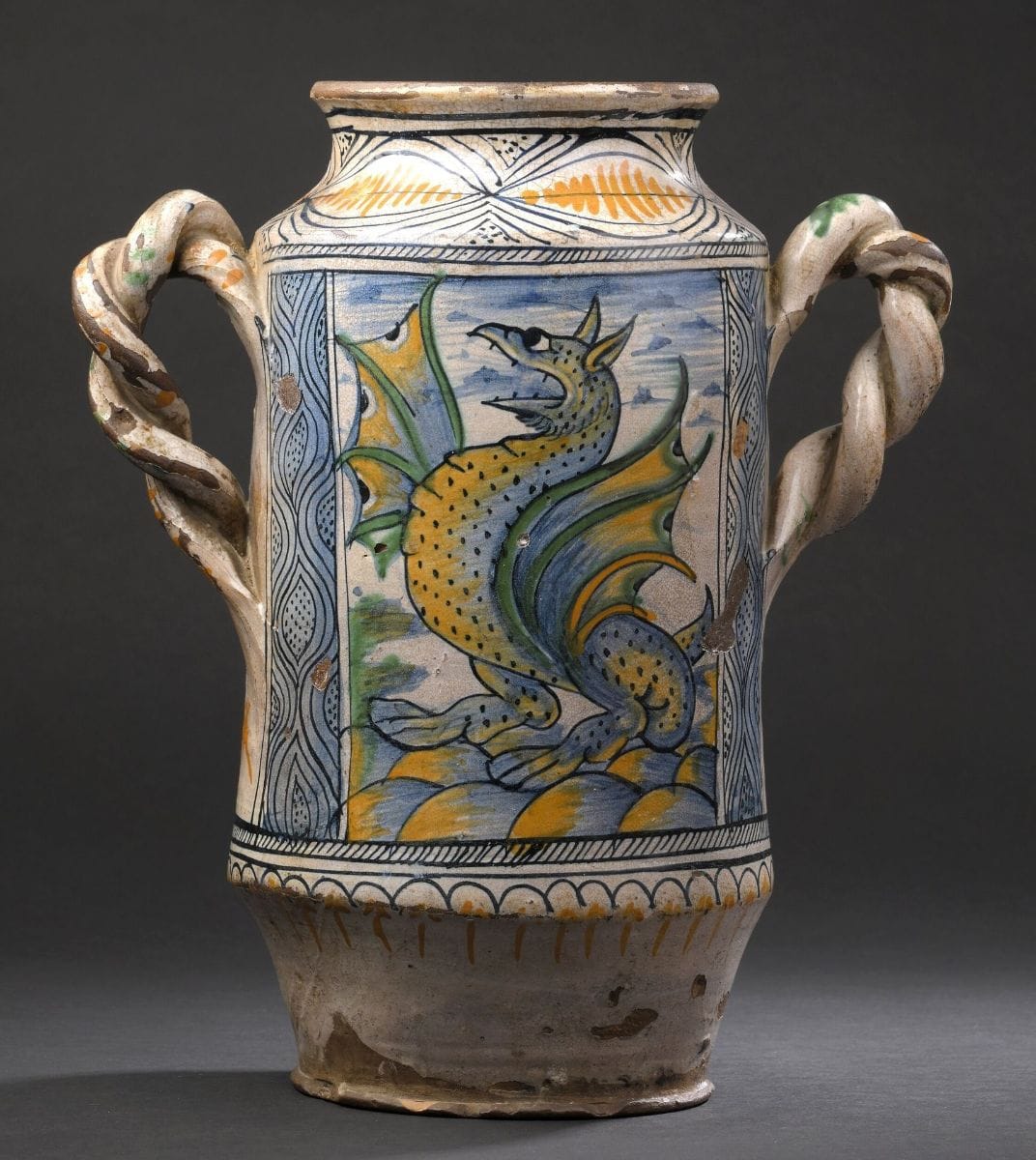
Among the highlights of the collection are a 15th-century Deruta albarello painted with a dragon and a bird (est. €10,000–15,000), comparable to examples in the Louvre and the Museo Internazionale delle Ceramiche in Faenza; a Nevers dish, circa 1560, showing Neptune in his marine chariot (est. €5,000–8,000); a Venetian tondo, circa 1580, depicting the episode of Mucius Scaevola (est. €6,000–8,000); and a Castel Durante albarello dated 1580, with a pharmaceutical inscription and heraldic device (est. €4,000–6,000).
This selection illustrates the virtuosity of Italian and French workshops, which combined technical mastery with decorative invention, offering collectors a rare panorama of the golden age of majolica.
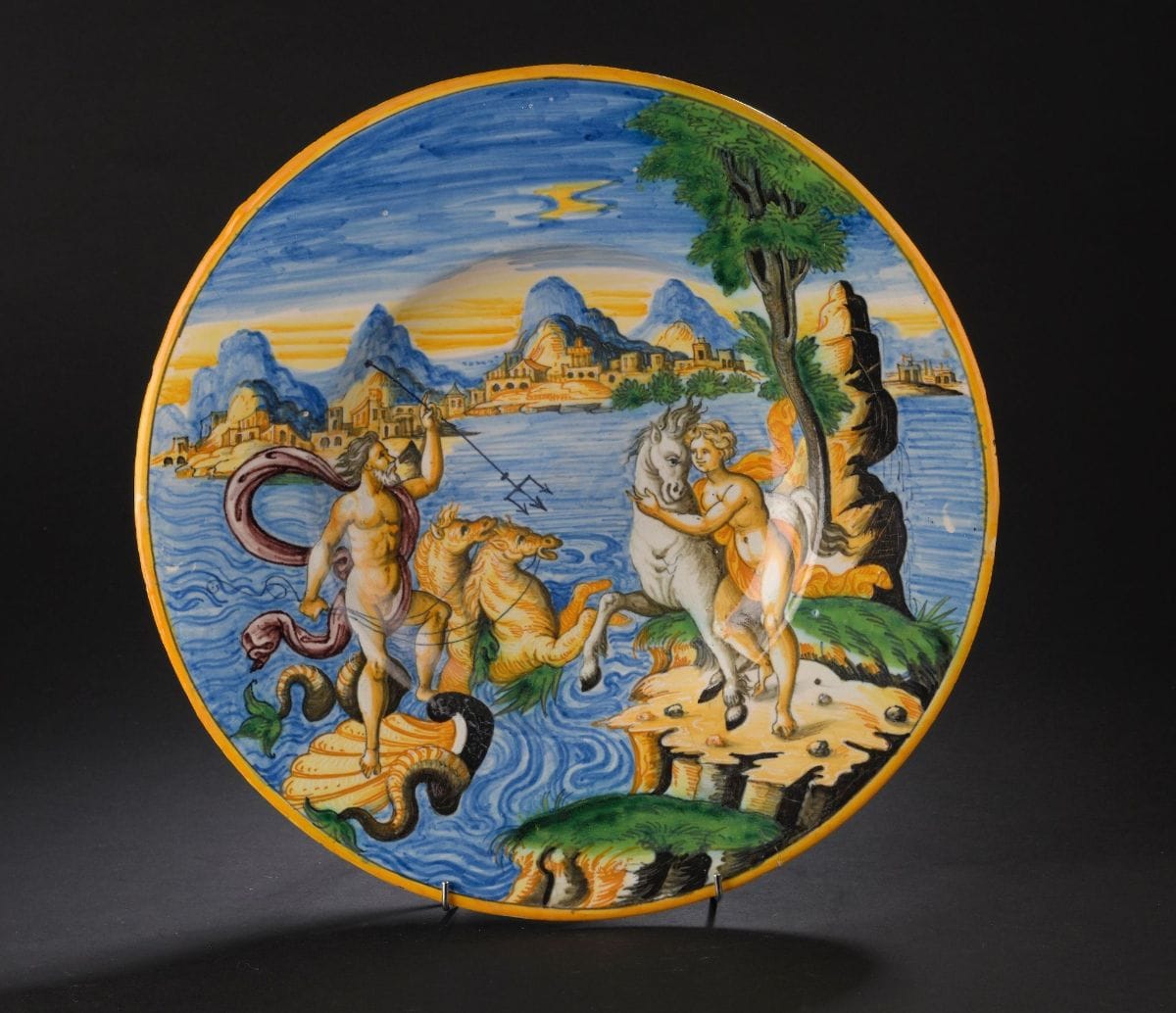
This sale highlights the art of the most gifted ceramic painters, who chose faience as their medium of expression, granting majolica its status as an art form in its own right.