FRIDAY, MAY 22, 2026 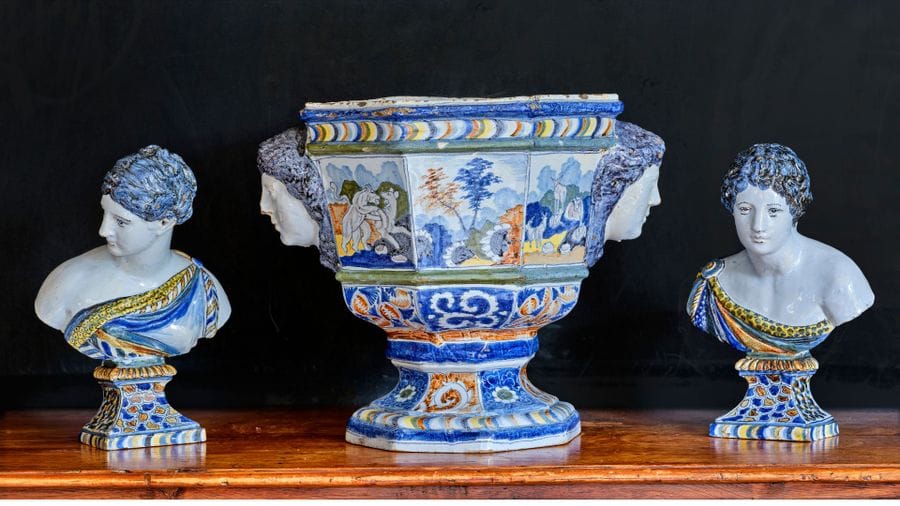
The "fond onde" decoration depicts deities moving through stylised waters rendered in flowing blue lines — a direct legacy of Italian influence. Mythological scenes abound, including a circular basin decorated with The Triumph of Neptune and Amphitrite, recalling Italian maiolica (estimate: €4,000–5,000), and a richly decorated ewer featuring scenes of Cupid carrying a quiver of arrows and Venus painting Love, after engravings by Odoardo Fialetti (estimate: €4,000–6,000).
Religious subjects are equally prominent, including sculptural works such as Saint William in Arms (estimate: €8,000–10,000) and a standing figure of Saint Luke, dated 1685 (estimate: €4,000–6,000). Scenes from the Gospels also feature prominently, including a large charger depicting Christ Praising the Faith of the Canaanite Woman, after an engraving by Matthäus Merian (estimate: €3,000–4,000), and another showing The Adoration of the Magi (estimate: €2,000–3,000). A striking example of polychrome decoration can be found in a charger depicting Christ and the Woman Taken in Adultery (estimate: €2,000–3,000).
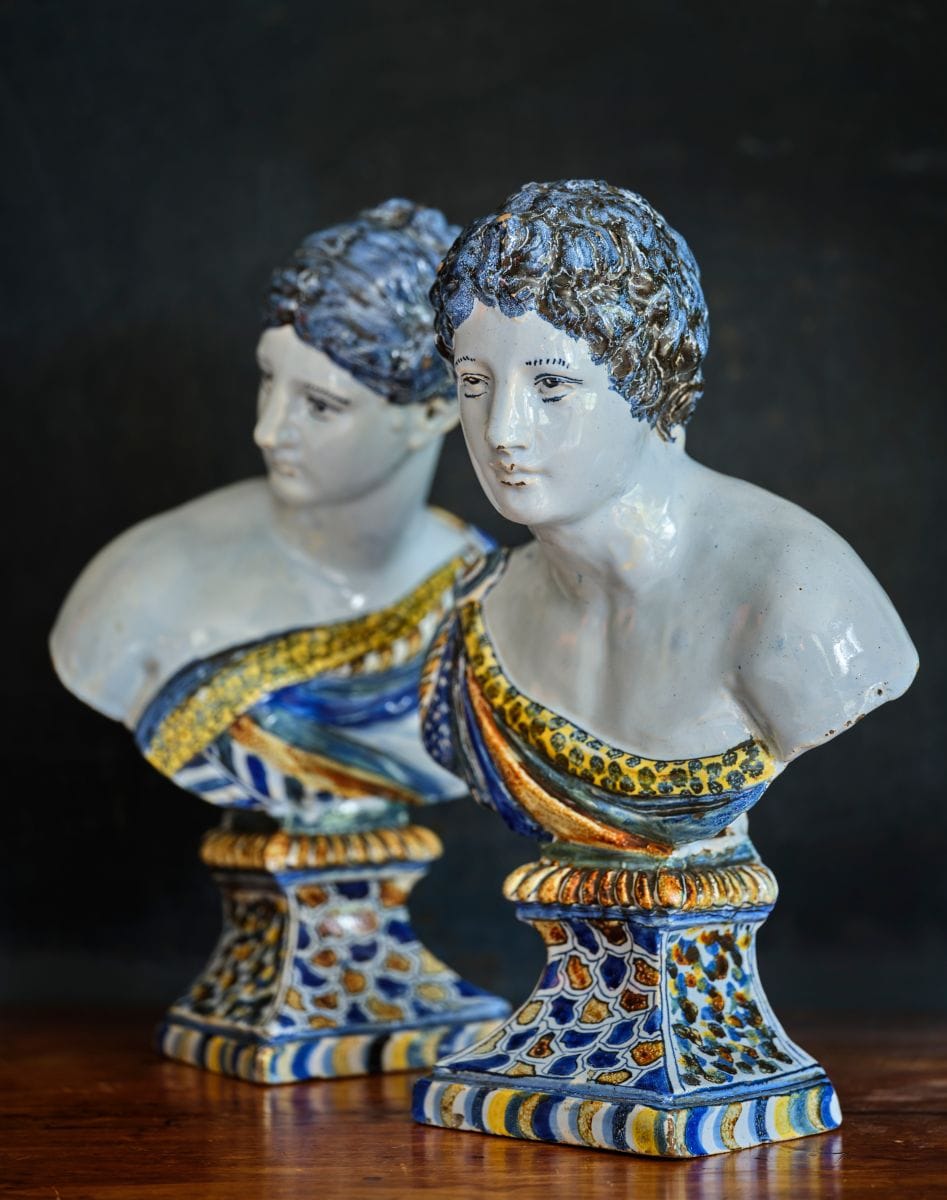
The decorative repertoire also drew inspiration from contemporary literature. Busts depicting Renaud and Armida, heroes of Torquato Tasso's epic poem Jerusalem Delivered, for which a comparable example is held at the Musée national de Céramique, Sèvres (estimate: €5,000–6,000), as well as pastoral scenes inspired by Honoré d'Urfé's L'Astrée, one of the most widely read novels of the seventeenth century (round dish, estimate: €1,500–2,000).
The Rougerie Collection: A Distinguished Collection of Nevers Faience
O n 22 May, Tessier & Sarrou et Associés will offer an exceptional collection devoted to Nevers faience: the Rougerie Collection.
A scholarly collection
The story of this collection is one of passion, curiosity and connoisseurship. United by a shared love of the arts, Mr and Mrs Rougerie spent the early years of their marriage visiting antiques dealers and auction houses. A trip to India proved to be a turning point, where they met Georges Lefebvre, whose expertise and enthusiasm introduced them to the world of ceramics. Back in Paris, they acquired their first piece — a large polychrome vase — marking the beginning of what would become one of the most coherent collections devoted to Nevers faience. Although they lived in Normandy, their attention turned firmly towards Burgundy, birthplace of a ceramic tradition introduced in the 16th century.
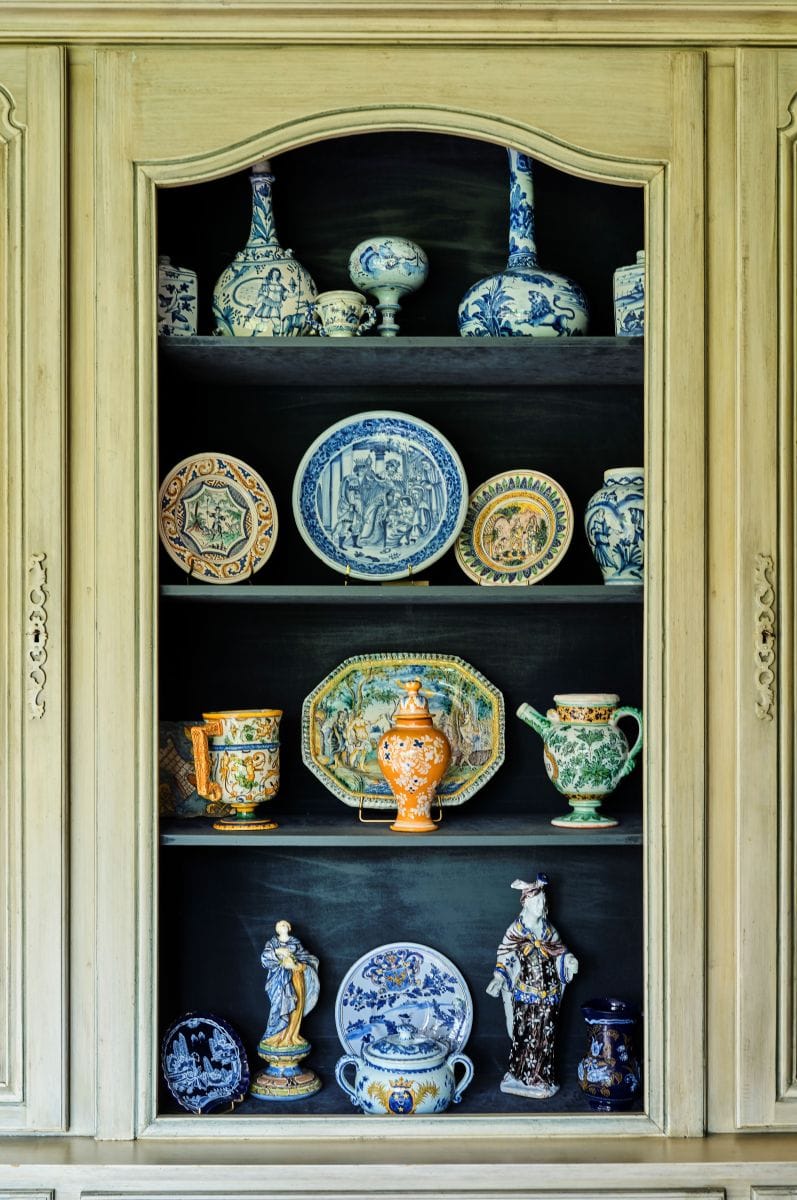
Inspired by the Italian maiolica of Faenza, Nevers faience quickly developed a distinctive visual language of its own, shaped by a wide range of influences. Under the reign of Louis XIV, production flourished, giving rise to works in which painting and sculpture are combined with remarkable virtuosity.
Reflecting this richness, the Rougerie Collection brings together a wide variety of forms — chargers, vases, ewers, narrative plaques and curious objects — illustrating the iconographic and stylistic diversity of Nevers production: Persian-inspired blue-ground decoration, biblical scenes derived from engravings, chinoiserie motifs and mythological compositions.
Assembled with discernment and exacting standards, the collection owes much to the guidance of leading specialists, while many of the works boast prestigious provenances, including the Lefebvre, Nicolier and Vandermeersch collections.
The golden age of Nevers faience
Nevers faience represents one of the great chapters in the history of French ceramics. Its rise began in the late 16th century, when Louis de Gonzague, Duke of Nevers, invited glassmakers from Liguria to settle in Nevers. They in turn brought Italian faience makers with them, helping to establish their craft locally. Within just a few decades, Nevers had gained such renown that, by the 17th century, it had become one of France’s leading centres of faience production.
While early decoration was largely inspired by Italian models, Nevers gradually developed its own identity. Iconographic sources expanded to include influences from France, Flanders, Persia and China, with decorative schemes adapted to local tastes.
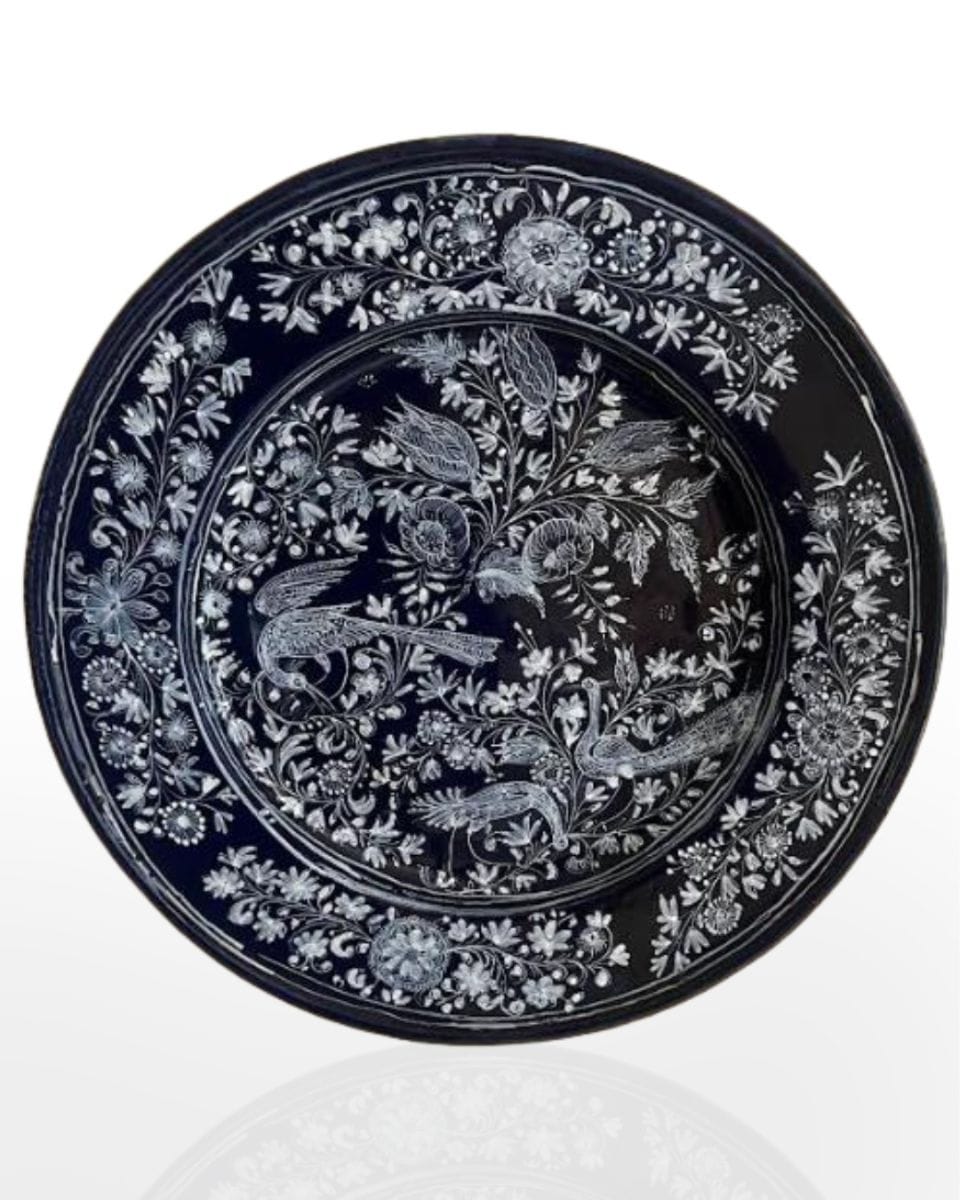
Among the most celebrated decorative repertoires is the so-called “Persian” style, characterised by sumptuous deep-blue glazes adorned with flowers, bouquets and birds. A particularly fine example is a large charger decorated in white enamel with flowering branches, exotic birds and a peacock, circa 1660–1670 (estimate: €8,000–12,000), alongside a large footed bowl decorated with scrolling foliage, floral bouquets, birds and insects, circa 1660–1680 (estimate: €3,000–4,000).
The "fond onde" decoration depicts deities moving through stylised waters rendered in flowing blue lines — a direct legacy of Italian influence. Mythological scenes abound, including a circular basin decorated with The Triumph of Neptune and Amphitrite, recalling Italian maiolica (estimate: €4,000–5,000), and a richly decorated ewer featuring scenes of Cupid carrying a quiver of arrows and Venus painting Love, after engravings by Odoardo Fialetti (estimate: €4,000–6,000).
Religious subjects are equally prominent, including sculptural works such as Saint William in Arms (estimate: €8,000–10,000) and a standing figure of Saint Luke, dated 1685 (estimate: €4,000–6,000). Scenes from the Gospels also feature prominently, including a large charger depicting Christ Praising the Faith of the Canaanite Woman, after an engraving by Matthäus Merian (estimate: €3,000–4,000), and another showing The Adoration of the Magi (estimate: €2,000–3,000). A striking example of polychrome decoration can be found in a charger depicting Christ and the Woman Taken in Adultery (estimate: €2,000–3,000).
The decorative repertoire also drew inspiration from contemporary literature. Busts depicting Renaud and Armida, heroes of Torquato Tasso's epic poem Jerusalem Delivered, for which a comparable example is held at the Musée national de Céramique, Sèvres (estimate: €5,000–6,000), as well as pastoral scenes inspired by Honoré d'Urfé's L'Astrée, one of the most widely read novels of the seventeenth century (round dish, estimate: €1,500–2,000).
Finally, Chinese-inspired decoration reflects growing trade with Asia under the Ming dynasty. Inspired by blue-and-white porcelain, these works combine scenes of scholars, landscapes and pagodas, while reinterpreting such motifs through a distinctly European lens. A pair of large octagonal vases decorated in blue and violet camaïeu with Chinese scenes, circa 1660–1680, perfectly illustrates this emerging taste (estimate: €3,000–3,500).
Alongside these major decorative groups are more unusual works, including examples of the so-called "tache de bougie" decoration — white enamel droplets freely splashed across a Persian blue ground. With their almost abstract quality, these pieces still feel strikingly modern today. A fine example is a “jasmine” vase with twisted handles (estimate: €3,000–4,000).
Through this carefully assembled collection, an entire chapter of French decorative arts history is brought to light, shaped by the discerning eye of collectors for whom faience was, in their own words, “both painting and sculpture”.