
"La Vie Est Belle" : The Lorenz Bäumer Collection
The resulting ensemble is a cabinet of curiosities in the truest sense, unbound by hierarchy and bringing together different periods, disciplines and sensibilities in a compelling visual dialogue. Each piece evokes an encounter, a journey, an emotion or a conversation, gradually revealing
"I like to live surrounded by objects and, above all, by things that serve as sources of inspiration…"
Creations
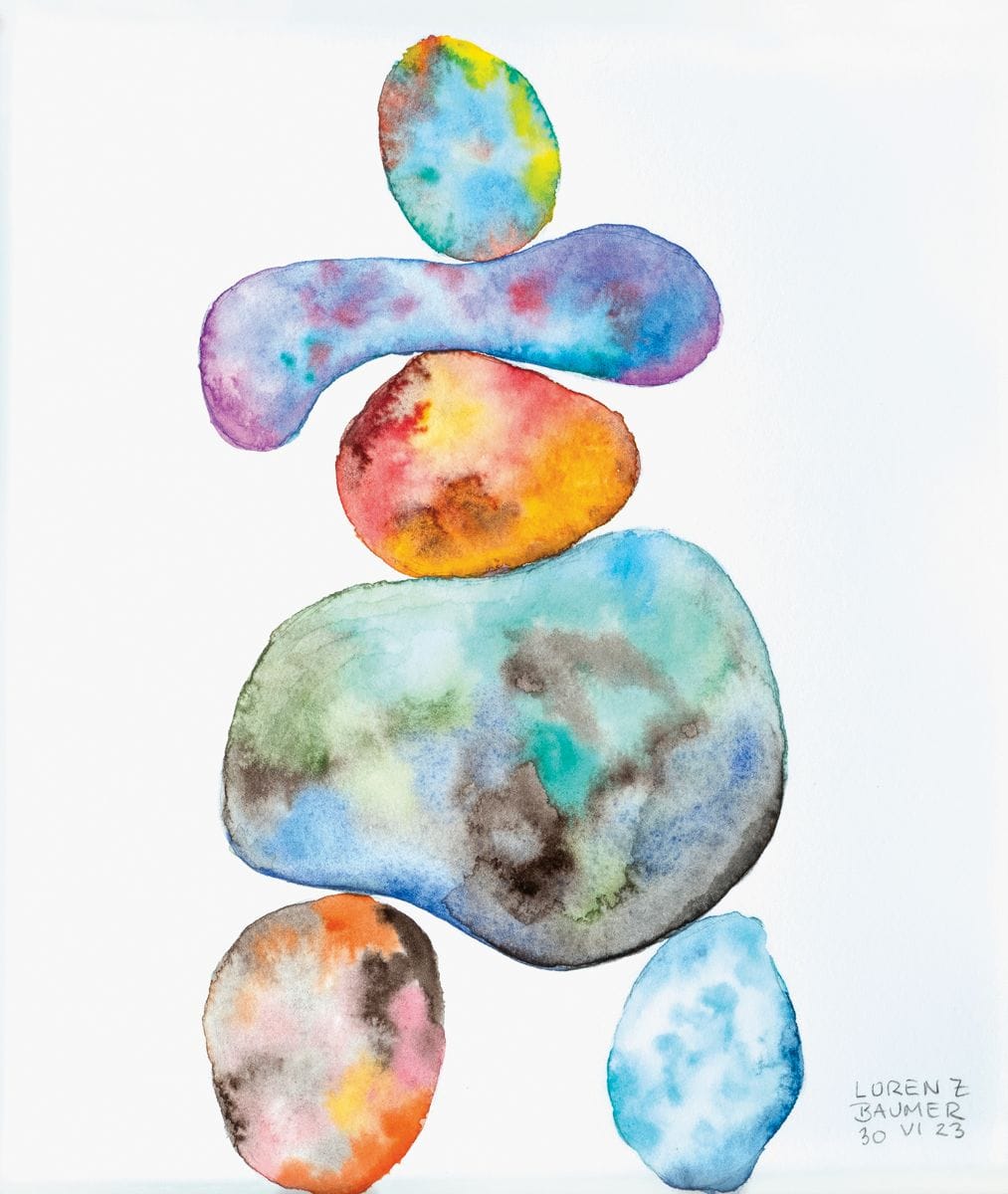
Several watercolours by Lorenz Bäumer offer a glimpse into a more intimate side of his artistic practice, beyond the world of jewellery. Idole (2023; estimate: €500–1,000) and Cairn (2024; estimate: €1,000–2,000) reveal another dimension of his sensibility, in which gesture and thought find their expression on paper. In the catalogue, he captures the essence of Cairn in a few evocative words: “The Cairn, a marker of life.”
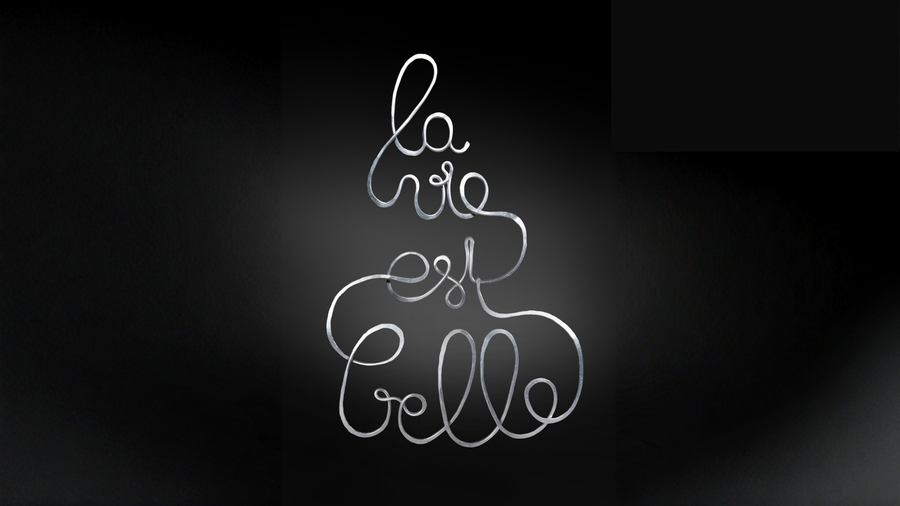
For the catalogue cover, Lorenz Bäumer selected La Vie est Belle, a sculpture created in 2019 by Valentine Herrenschmidt. The artist describes the work as “a sculptural form of writing, its subtle interplay of solid and open forms uniting a mastery of gesture, inherited from Calder, with the precision of jewellery-making techniques. Unique in character and masterful in execution, the work possesses a singular, timeless presence.” The choice is a fitting reflection of Bäumer’s appreciation for works in which expressive freedom is matched by a consummate command of materials (estimate: €800– 1,200).
Inspirations
The second part of the sale offers a compelling insight into Lorenz Bäumer’s eclectic tastes and the artistic friendships he has cultivated over the years. Spanning contemporary creation, 19th-century works, the great names of Art Deco and the decorative arts of the early 20th century, the selection brings together a remarkable breadth of periods and disciplines. Photography, sculpture, furniture, lighting, objets d’art and silverware coexist in a personal assemblage that transcends stylistic boundaries and traditional hierarchies.
What draws these works together is a shared sensibility: a fascination with materials, a flair for inventive forms and an appreciation for the distinctive hand of the artist. Rather than adhering to a particular chronology or movement, the collection unfolds as an intimate portrait of its owner, shaped by personal affinities, chance encounters and the enduring appeal of individual works.
Among the contemporary artists most closely associated with Bäumer’s world is Vik Muniz, represented in the sale by Vase blanc avec fleurs, d’après Odilon Redon, from the Pictures of Magazine, Still Life series, 2004 (estimate: €10,000–15,000).
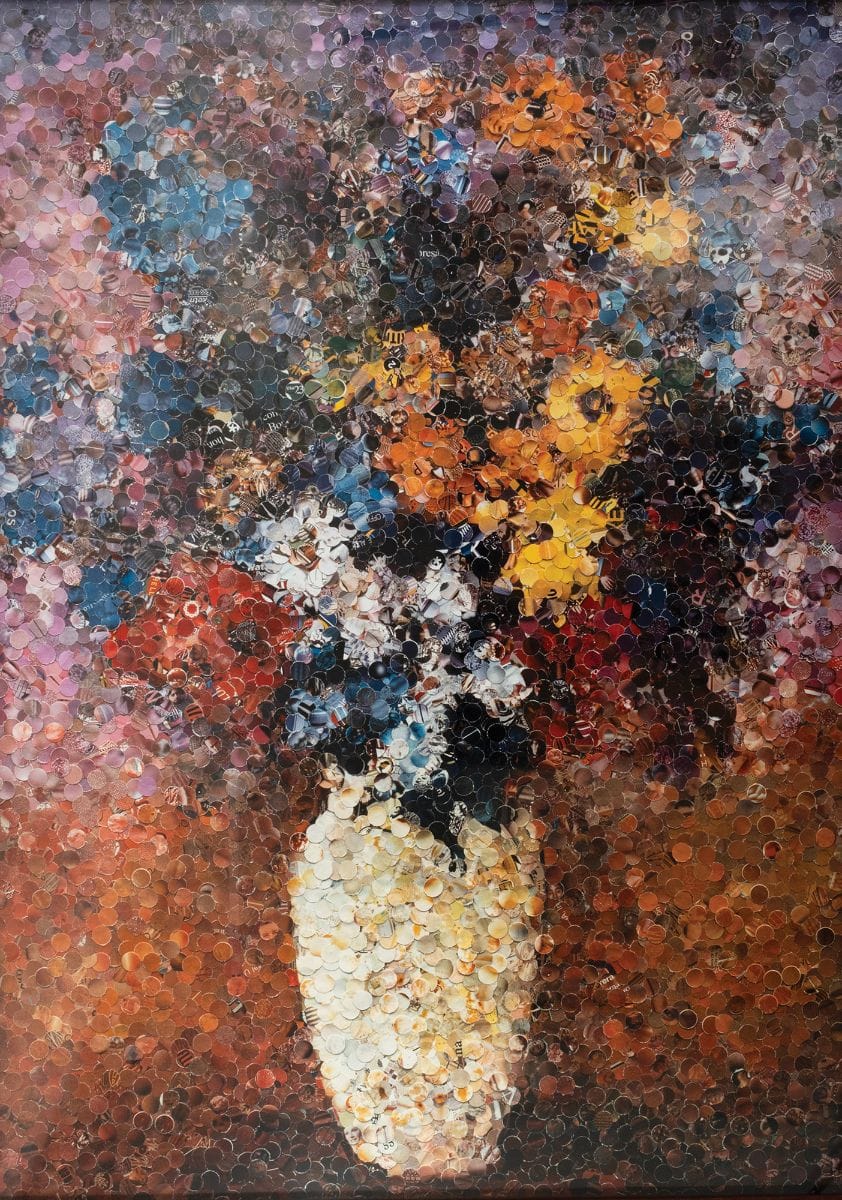
The friendship between Bäumer and Muniz dates back to the late 1990s, when Bäumer discovered the artist’s recreation in chocolate syrup of Hans Namuth’s celebrated portrait of Jackson Pollock at the Museum of Modern Art in New York. Known for his inventive use of unconventional materials — from toys and dust to caviar, ashes, discarded objects and tomato sauce — Muniz reconstructs images drawn from collective visual memory, which he then captures through photography.
The resulting works play with recognition and perception, transforming familiar images through unexpected means. Hubert Le Gall is another artist whose work is closely connected with Bäumer’s world. The French designer has created interiors and furnishings for the jeweller, including his boutique in Doha, Qatar, where the architectural references of Place Vendôme are reinterpreted through poetic, mineral-inspired details.
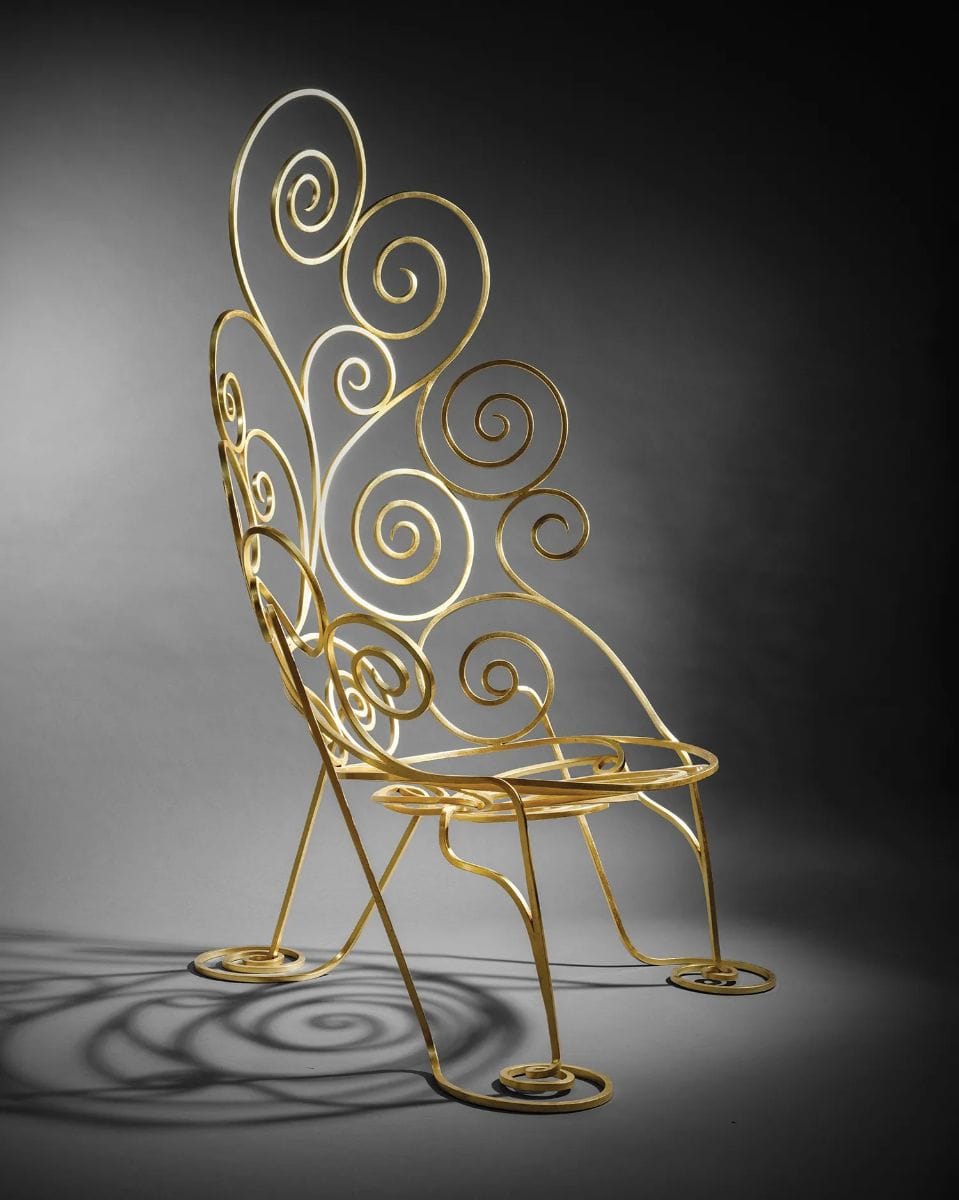
Several works by Le Gall feature in the sale, including a pair of occasional tables combining a top dating from the 1920s with contemporary legs (estimate: €6,000– 8,000), and the Pénélope et Argos armchair, created in 2020. With its back of gilded, patinated wrought-iron scrolls, the chair illustrates the designer’s distinctive approach to material, ornament and sculptural form (estimate: €8,000–12,000).
Lorenz Bäumer’s appreciation for sculptural forms and expressive materials finds a compelling counterpart in the work of Yonel Lebovici. An artist who defied categorisation, Lebovici moved beyond the constraints of functionalism to pursue a distinctly personal vision, placing formal and aesthetic exploration at the heart of his practice. His inventive use of steel, combined with a fascination for mechanical ingenuity, lends his creations a striking sculptural presence.
This approach is exemplified by the Pantographe table lamp, a model conceived in 1972 in nickel-plated steel (estimate: €8,000–12,000), and the Satellite lamp, designed in 1969, comprising three movable discs of transparent methacrylate mounted on a chromed-steel base (estimate: €4,000– 6,000). A similar model is held in the collection of the Musée des Arts décoratifs in Paris.
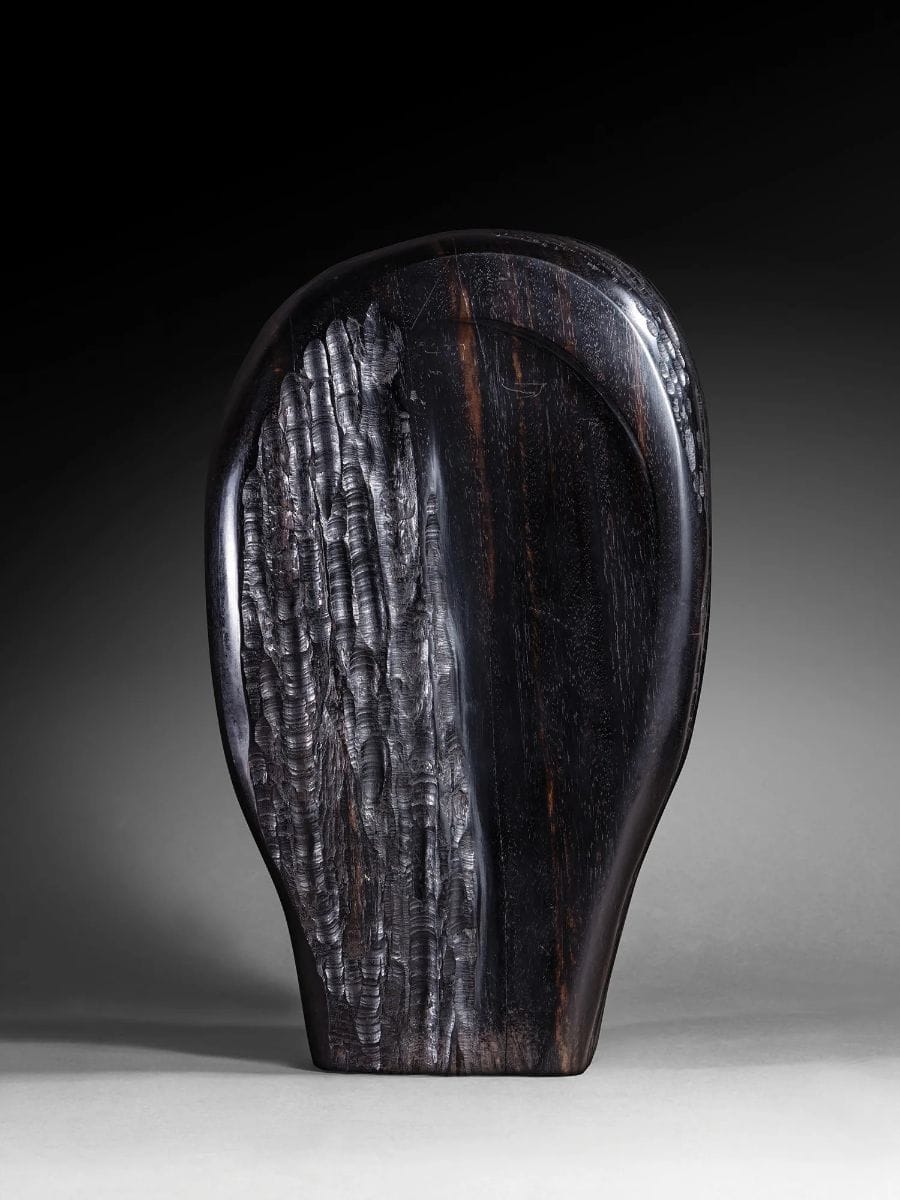
A more organic expression of this sensitivity to materials is found in the sculptures of Alexandre Noll, another artist particularly close to Bäumer’s heart. Noll explored the inherent qualities and expressive possibilities of his chosen materials, working with a wide variety of woods, from the rarest and most precious to the most modest and rustic.
Through direct carving, he brought to the fore the natural grain, contours and tonal nuances of each piece of wood, transforming them into freely articulated forms with an almost archaic quality. The sale includes several examples of his work, among them an ebony vide-poche (estimate: €3,000– 5,000), a bowl (estimate: €2,500–3,500) and Tête, an ebony sculpture with an ovalised form (estimate: €30,000–50,000).
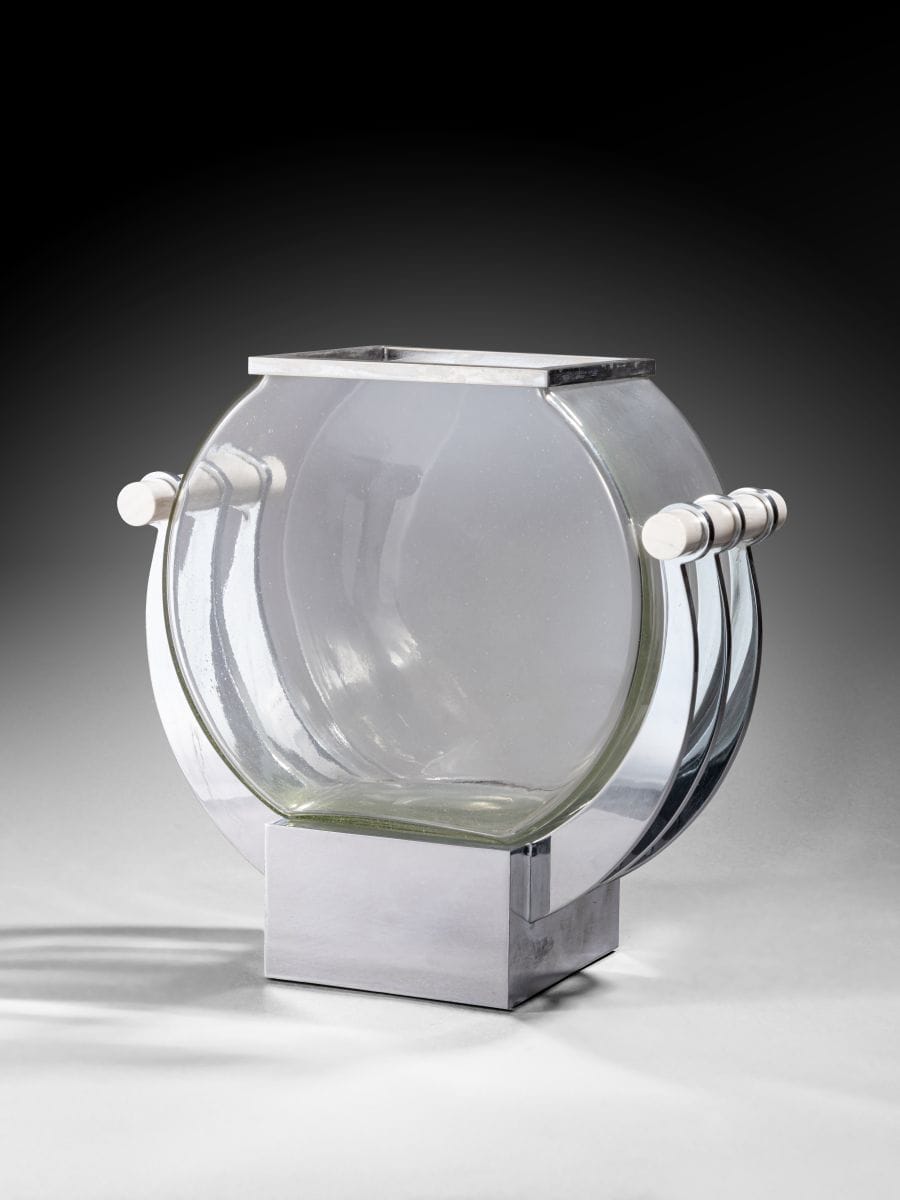
This fascination with materials and unexpected combinations finds further expression in the decorative arts of the interwar period, notably in a remarkable illuminated aquarium vase conceived circa 1935 by Edgar Brandt (1880–1960) and Georges Bastard (1881–1939). A testament to the spirit of Art Deco, the piece brings together the expressive strength of metalwork and the refinement of ceramic craftsmanship.
The two artists had previously collaborated on a series of vases for the ocean liner Normandie, crafted in chromed metal and bearing the emblem of the Compagnie Générale Transatlantique. Different versions were installed in the ship’s gallery hall and first-class cabins. The aquarium vase represents their second known collaboration, bringing together Brandt’s mastery of wrought iron and Bastard’s decorative sensibility in a striking interplay of materials (estimate: €8,000–12,000).
The sale then turns to the turn of the 20th century with a pair of silver ewers by Gustave Keller. Designed circa 1900, the model is distinguished by its sinuous body and detached lateral handle (estimate: €6,000– 8,000). A similar example was exhibited at the 1900 Paris Exposition Universelle and is now in the collection of the Musée d’Orsay. Here, the art of the silversmith finds expression in the elegance of the lines and the precision of the craftsmanship.
The collection reaches further back into the 19th century with a monumental jardinière dating from the Second Empire, fashioned from richly carved and gilded wood. Supported by two winged female busts entwined with foliage and ending in volutes, this striking piece exemplifies the period’s taste for elaborate ornamental compositions (estimate: €3,000–5,000).


