A Previously Unseen Alexander Calder Mobile Makes Its Market Debut
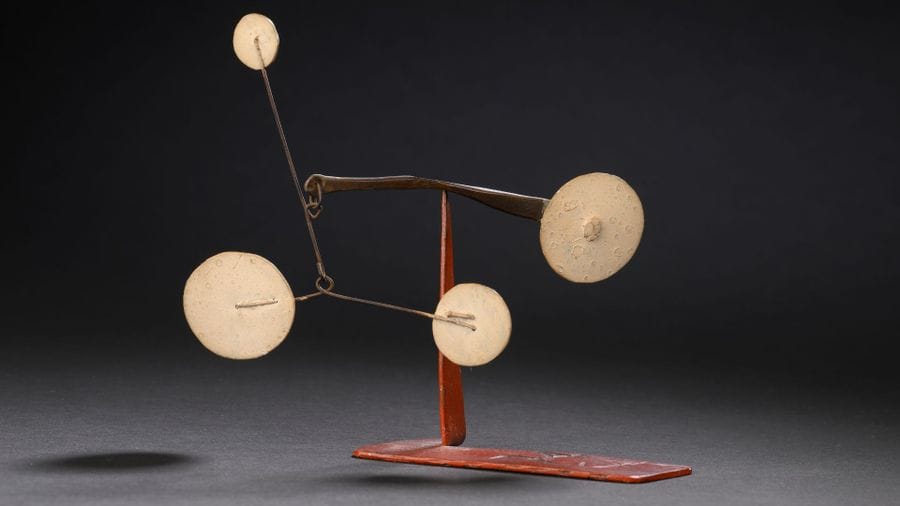
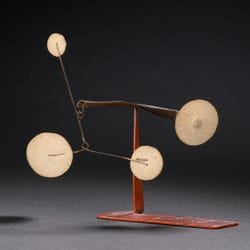
Remaining unseen on the public market to this day, this small-scale sculpture boasts a particularly distinguished provenance. It was gifted by the artist to Mrs H., before being kept within the same family for over fifty years. It will be offered at auction for the first time, with an estimate of €80,000 to €120,000.
The invention of the mobile by Calder is closely tied to a decisive encounter with Piet Mondrian. During a visit to the latter’s studio, Calder discovered his celebrated abstract compositions made up of coloured planes. Struck by both their rigour and vitality, he immediately envisioned the possibility of setting them in motion. Faced with Mondrian’s refusal—he remained committed to the static nature of his paintings—Calder chose to pursue this intuition independently. After a number of early, tentative experiments, he gave rise to a new form of sculpture, which Marcel Duchamp would later name the “mobile”.
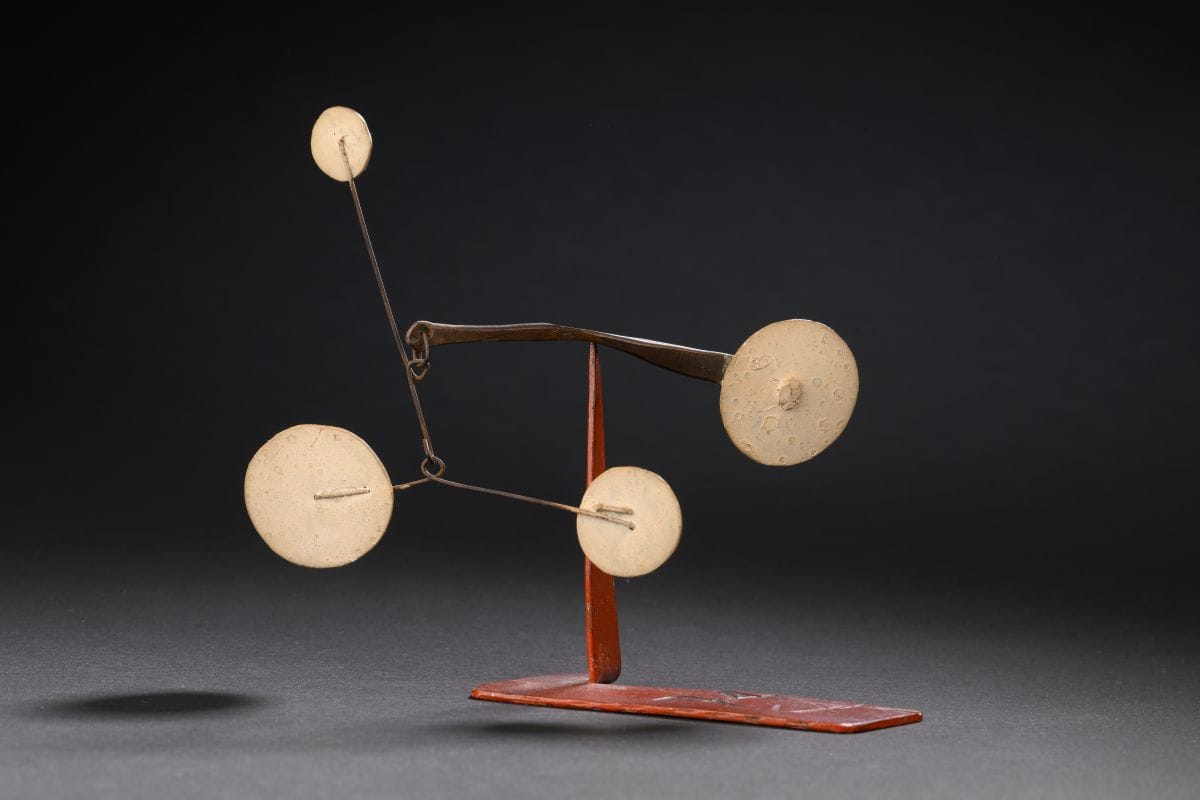
Initially conceived as motorised constructions, Calder’s mobiles quickly evolved into forms animated solely by air currents. This shift marked a crucial stage in his practice, introducing a poetic and unpredictable dimension at the heart of his work. The mobiles thus became the expression of a delicate balance between form, space and movement. The work presented by Oger-Blanchet fully embodies this exploration.
Created in 1974, it reflects the mastery Calder had achieved in the art of sculpture in motion. By this time, the artist enjoyed major international recognition: his mobiles and stabiles were exhibited in leading institutions and installed in prominent public spaces. He also received significant commissions for monumental works, particularly in Europe and the United States, cementing his central role in the history of twentieth-century art.