Millon Auctions Achieve €2.5 Million Across Two Historic Sales at Drouot
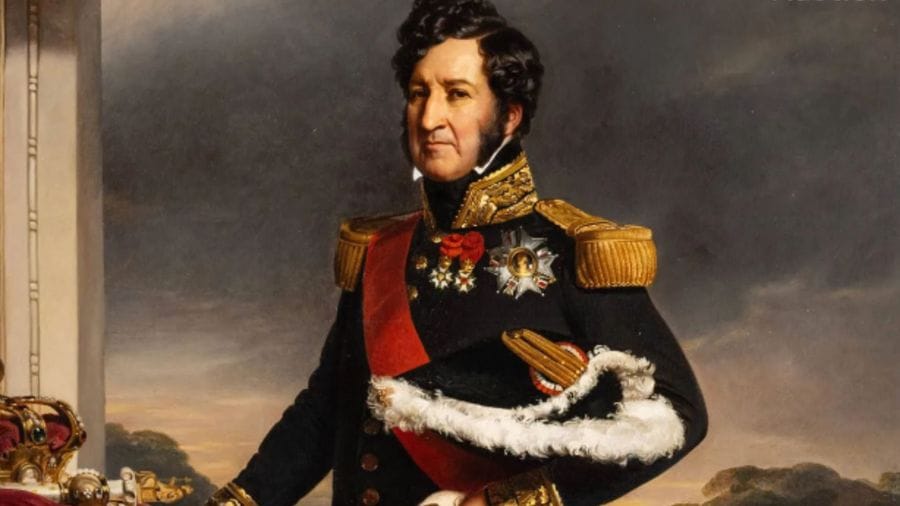

Court painter to the leading European dynasties, Winterhalter immortalised the great figures of his age – from Napoleon III to Empress Elisabeth of Austria – imbuing his portraits with both grandeur and intimate sensitivity. In this work, he offers a nuanced portrayal of a monarch who was elected rather than crowned, combining the traditional codes of power with a subtle psychological insight: that of a ruler fully aware of his position, yet marked by a certain restraint and caution.
Remaining in the descendants of the comte de Montalivet until the 1990s, the painting also boasts a remarkable historical provenance. A key figure of the July Monarchy and a close confidant of the King – known as ‘the King’s friend’ – Montalivet notably played a decisive role in the creation of the museum at Versailles.
Another notable result came in the Souvenirs Historiques sale, where a jardinière formerly owned by Empress Eugénie realised €52,960 and was pre-empted by the Musée national de Céramique, Sèvres.
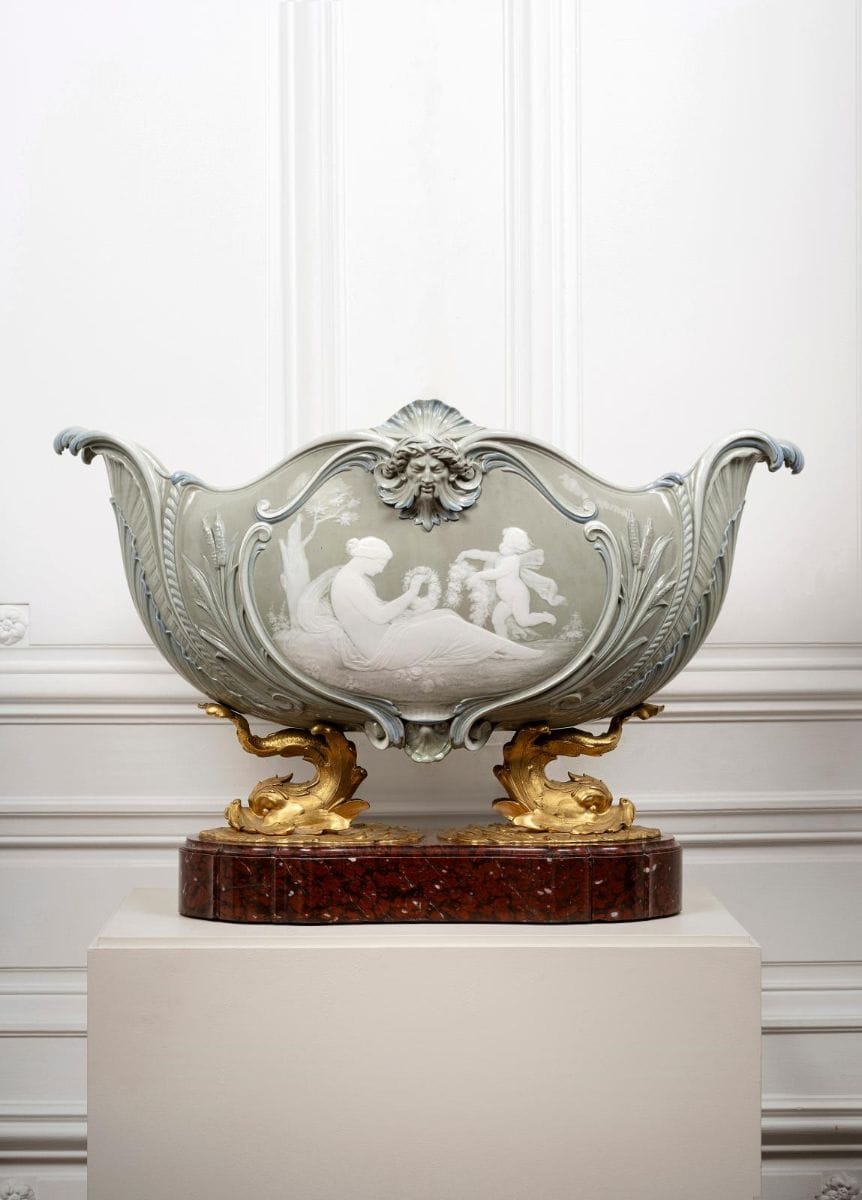 -
Acquired by the Empress in 1866, this porcelain piece reflects Eugénie’s discerning taste for the decorative arts and her active patronage of the Sèvres manufactory. Likely exhibited at the 1867 Exposition Universelle in Paris, it illustrates the technical innovations of the Second Empire, notably the use of celadon glazes and the encastage firing process, as well as the pâte-sur-pâte decoration developed by Hyacinthe Regnier.
Designed after a ‘Louis XV’ model by Jules Diéterle, the jardinière epitomises the stylistic revival of porcelain under the Second Empire, a period during which the medium regained its full artistic autonomy. An intimate object, taken into exile by the Empress to England, it reappeared on the market nearly a century after its first sale at Christie's in 1927.