FRIDAY, MARCH 27, 2026 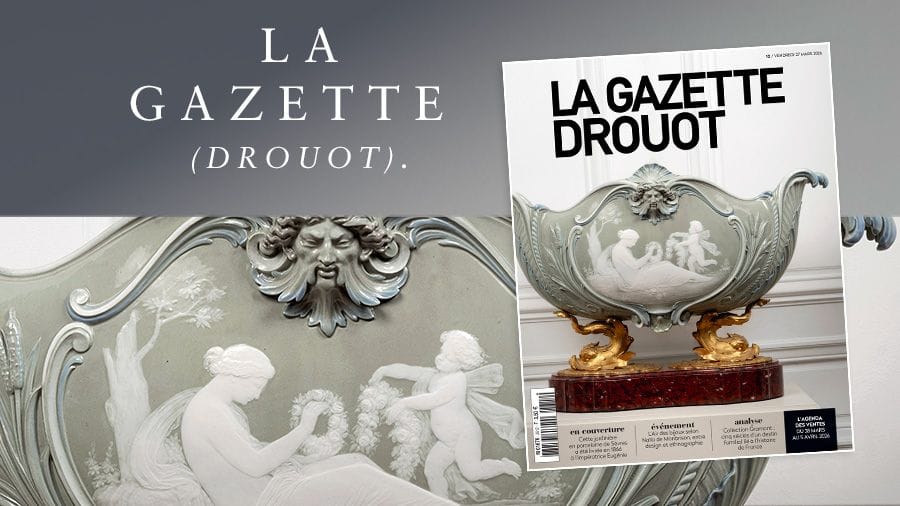
This Week in La Gazette Drouot : Eugénie's jardinière, imperial Sèvres porcelain
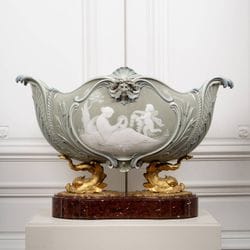
C ombining sobriety and refinement, this Sèvres porcelain jardinière, delivered in 1866 by order of the Empress, is a remarkable testimony to the taste of the last French sovereign.
By Christophe Provot
The Empress acquired it in 1866 and had it delivered, along with its missing counterpart, to her private mansion in the Rue de l'Élysée," explains expert Maxime Charron. It's not a direct commission, but it's likely that the sovereign saw it at the Sèvres store and wanted to buy it". Indeed, the jardinière lacks the famous crowned "N" mark, attesting to an imperial commission, due to the absence of gilding and painted decoration.
It was certainly shown at the 1867 Exposition Universelle in Paris, as the engravings of the period prove. But it was not exhibited on the Manufacture's stand, which means that it was on loan directly from the Empress. For the occasion, she had presented "twenty-one pieces of contemporary French art", i.e. made after 1855, including several porcelains illustrating the technical progress of the imperial manufactory. Under Napoleon III, the manufactory benefited from the solicitude of the imperial couple, who regularly visited the premises - their Saint-Cloud estate being nearby.
Eugenie, as a patron of the arts, encouraged the innovations introduced at Sèvres throughout the regime. From the outset, the Second Empire wished to make an artistic break with the previous period.
Read the full version of "Eugénie's jardinière, imperial Sèvres porcelain" in La Gazette Drouot
On July 11, 1920, Empress Eugenie died in Madrid at the age of 94. Certainly the most controversial - and despised - figure of the Second Empire, she had lived in exile between France, Spain and England, in her home at Farnborough Hill in Hampshire, surrounded by countless objects and relics. This planter was one of them. Its reappearance on the market almost one hundred years after its first sale, on July 7, 1927 at Christie's London, following the death of Prince Victor Napoléon (1862-1926), offers a rare opportunity to discover an object that once belonged to Eugénie.
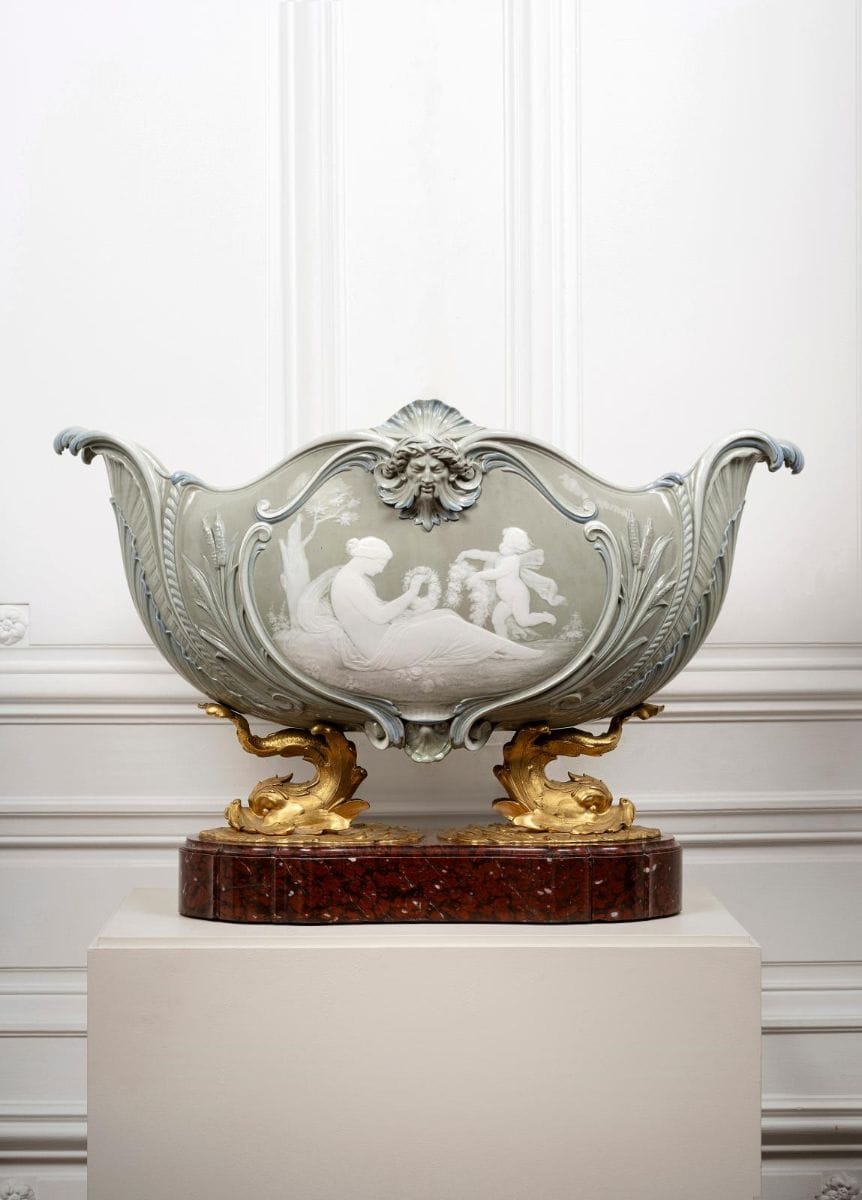
The Empress acquired it in 1866 and had it delivered, along with its missing counterpart, to her private mansion in the Rue de l'Élysée," explains expert Maxime Charron. It's not a direct commission, but it's likely that the sovereign saw it at the Sèvres store and wanted to buy it". Indeed, the jardinière lacks the famous crowned "N" mark, attesting to an imperial commission, due to the absence of gilding and painted decoration.
It was certainly shown at the 1867 Exposition Universelle in Paris, as the engravings of the period prove. But it was not exhibited on the Manufacture's stand, which means that it was on loan directly from the Empress. For the occasion, she had presented "twenty-one pieces of contemporary French art", i.e. made after 1855, including several porcelains illustrating the technical progress of the imperial manufactory. Under Napoleon III, the manufactory benefited from the solicitude of the imperial couple, who regularly visited the premises - their Saint-Cloud estate being nearby.
Eugenie, as a patron of the arts, encouraged the innovations introduced at Sèvres throughout the regime. From the outset, the Second Empire wished to make an artistic break with the previous period.

Discover a world of art and auctions with La Gazette Drouot
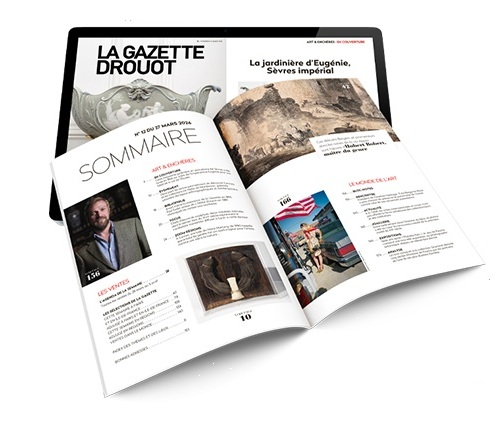
Every week, since 1891, La Gazette Drouot has been the authoritative weekly for public auctions of furniture, paintings and objets d'art. Our issues published contain thousands of articles which explain, decipher and analyse objects as well as their market, while others give leading figures a forum for sharing their passion. And not forgetting the cultural news, enlightened by in-depth articles on diverse subjects, often published for the first time.
You too can enjoy this wealth of information and images by picking up La Gazette Drouot.
You too can enjoy this wealth of information and images by picking up La Gazette Drouot.