FRIDAY, OCTOBER 31, 2025 
This Week in La Gazette Drouot : Caillebotte at Petit Gennevilliers with modern apple blossoms
P ainted in 1892 , this canvas by the Impressionists' friend and patron shows his attachment to this corner of the Hauts-de-Seine region, where he settled in 1881. A pictorial testimony before industrialization, but also a story of passion and painting.
By Christophe Provot
Read the full version of "Caillebotte at Petit Gennevilliers with modern apple blossoms" in La Gazette Drouot
Anyone passing between the bridges of Argenteuil and Colombes today will find it hard to recognize Caillebotte's familiar surroundings, once filled with opulent villas, vast flower-filled gardens and green meadows. Although the environment has changed, Gustave Caillebotte had recognized in his time the charms of Petit Gennevilliers - a district of Gennevilliers on the banks of the Seine, opposite Argenteuil and some ten kilometers from Paris - which he had discovered on a visit to Monet.
In turn, in 1881, he and his brother Martial acquired a property, admittedly small compared to the family estate in Yerres sold after their mother's death in 1879, but with the immense advantage of its proximity to the Cercle de la voile de Paris sailing club. A major asset for these yachting enthusiasts. Caillebotte, the painter of mineral Haussmannian Paris, was in need of fresh air and sought to distance himself from the capital and its disillusions : in 1882, an internal conflict with his peers led him to resign from his position as organizer of the seventh Impressionist exhibition, which was entrusted to the art dealer Paul Durand-Ruel. Nevertheless, he kept in touch with his painter friends, whom he received on a regular basis.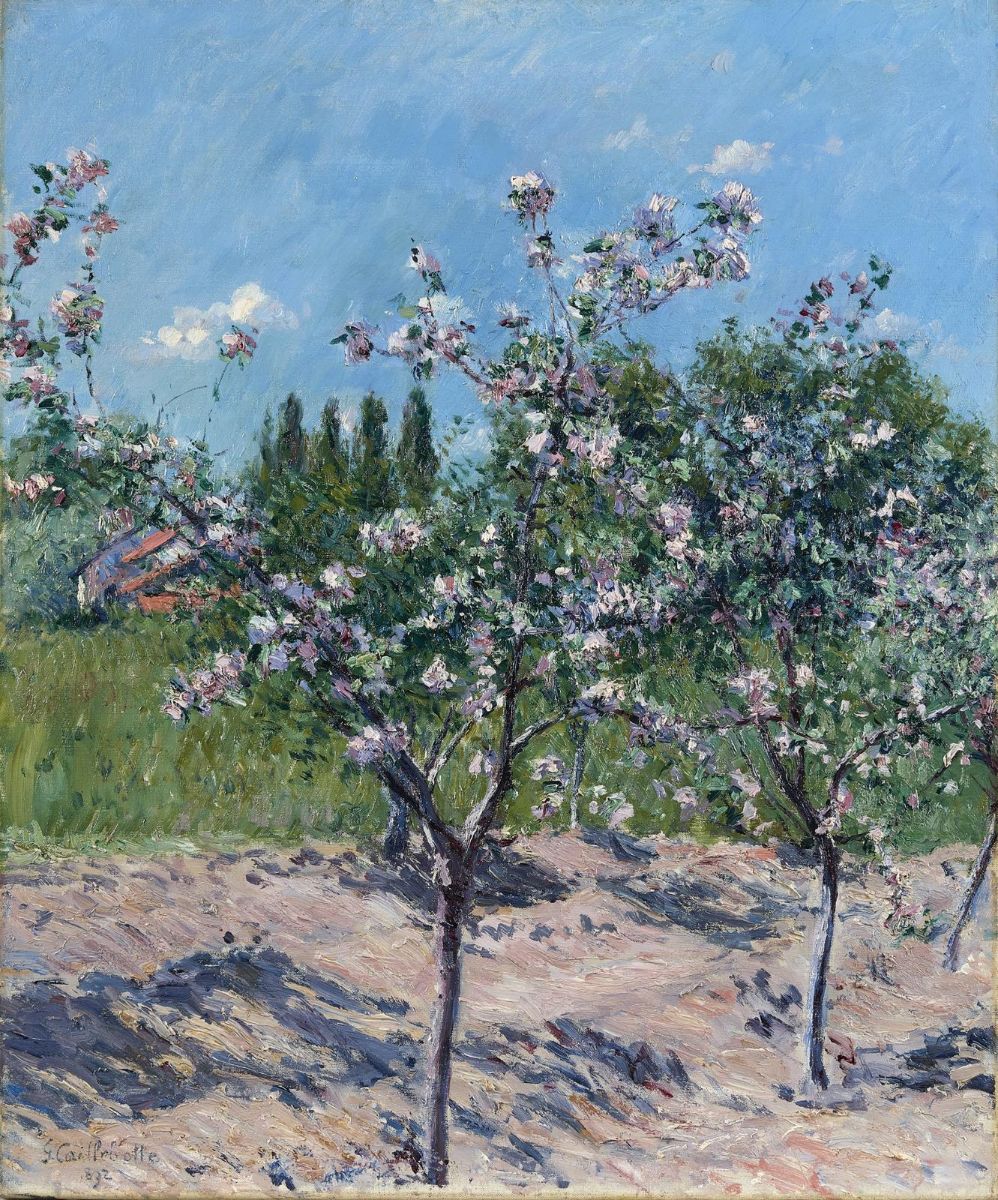
When Martial married in 1887, Gustave bought back his share, acquiring other plots around the property, and adding a studio, a huge greenhouse and a boathouse. He also created a vast garden, which became the subject of many of his paintings. After all, he had a passion for gardening, exchanging seeds and advice with Monet, and bringing in shipments of soil by barge. It was probably near this garden that he painted Pommiers en fleurs, Petit Gennevilliers, in 1892, two years before he died suddenly of a stroke at the age of 45.
Read the full version of "Caillebotte at Petit Gennevilliers with modern apple blossoms" in La Gazette Drouot
Anyone passing between the bridges of Argenteuil and Colombes today will find it hard to recognize Caillebotte's familiar surroundings, once filled with opulent villas, vast flower-filled gardens and green meadows. Although the environment has changed, Gustave Caillebotte had recognized in his time the charms of Petit Gennevilliers - a district of Gennevilliers on the banks of the Seine, opposite Argenteuil and some ten kilometers from Paris - which he had discovered on a visit to Monet.
In turn, in 1881, he and his brother Martial acquired a property, admittedly small compared to the family estate in Yerres sold after their mother's death in 1879, but with the immense advantage of its proximity to the Cercle de la voile de Paris sailing club. A major asset for these yachting enthusiasts. Caillebotte, the painter of mineral Haussmannian Paris, was in need of fresh air and sought to distance himself from the capital and its disillusions : in 1882, an internal conflict with his peers led him to resign from his position as organizer of the seventh Impressionist exhibition, which was entrusted to the art dealer Paul Durand-Ruel. Nevertheless, he kept in touch with his painter friends, whom he received on a regular basis.
Gustave Caillebotte (1848–1894),
Flowering Apple Trees, Petit Gennevilliers, 1892,
oil on canvas, signed and dated lower left, 65 x 54 cm.
Estimate: €300,000–400,000
Flowering Apple Trees, Petit Gennevilliers, 1892,
oil on canvas, signed and dated lower left, 65 x 54 cm.
Estimate: €300,000–400,000
When Martial married in 1887, Gustave bought back his share, acquiring other plots around the property, and adding a studio, a huge greenhouse and a boathouse. He also created a vast garden, which became the subject of many of his paintings. After all, he had a passion for gardening, exchanging seeds and advice with Monet, and bringing in shipments of soil by barge. It was probably near this garden that he painted Pommiers en fleurs, Petit Gennevilliers, in 1892, two years before he died suddenly of a stroke at the age of 45.

Discover a world of art and auctions with La Gazette Drouot
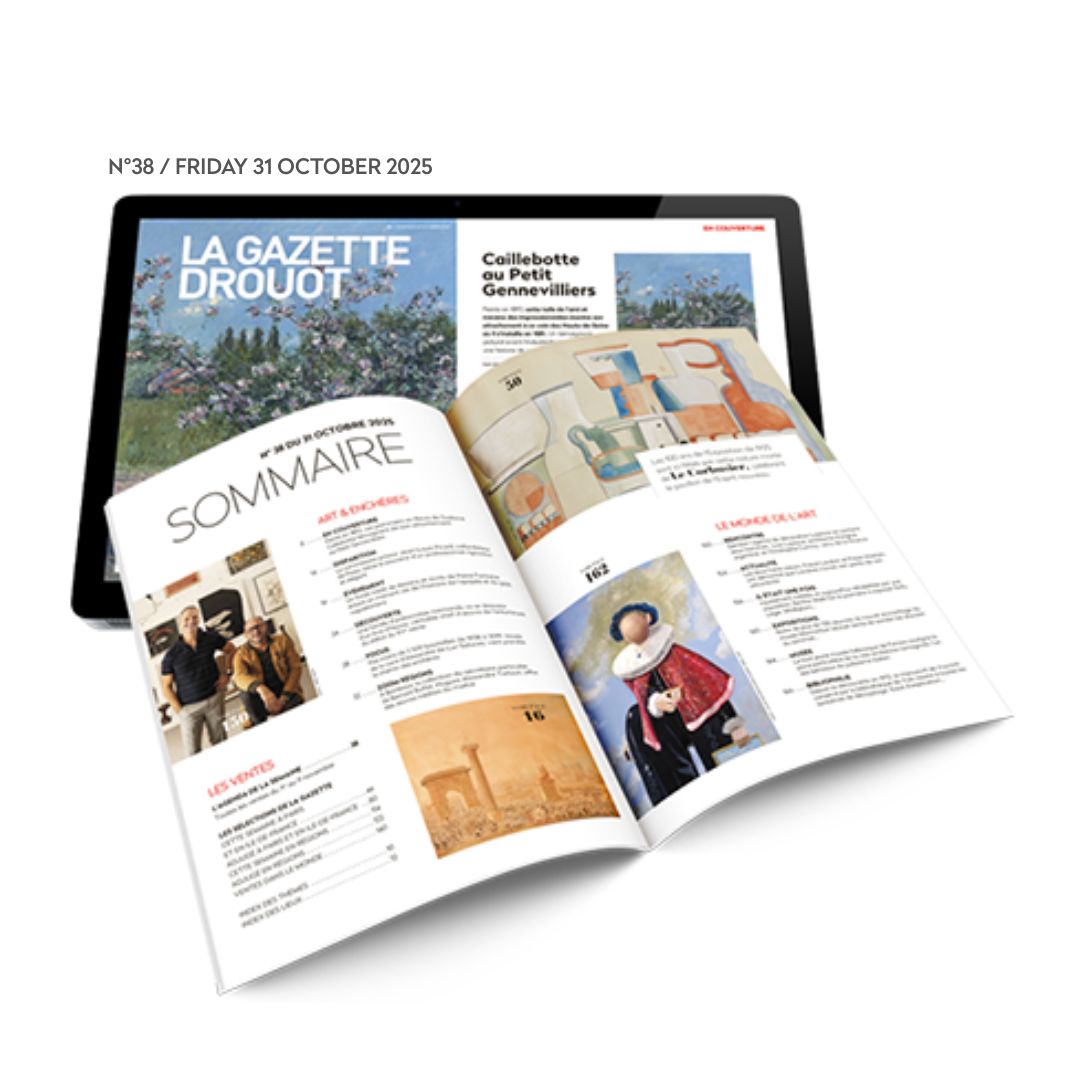
Every week, since 1891, La Gazette Drouot has been the authoritative weekly for public auctions of furniture, paintings and objets d'art. Our issues published contain thousands of articles which explain, decipher and analyse objects as well as their market, while others give leading figures a forum for sharing their passion. And not forgetting the cultural news, enlightened by in-depth articles on diverse subjects, often published for the first time.
You too can enjoy this wealth of information and images by picking up La Gazette Drouot.
You too can enjoy this wealth of information and images by picking up La Gazette Drouot.