MITTWOCH, 20. MAI 2026 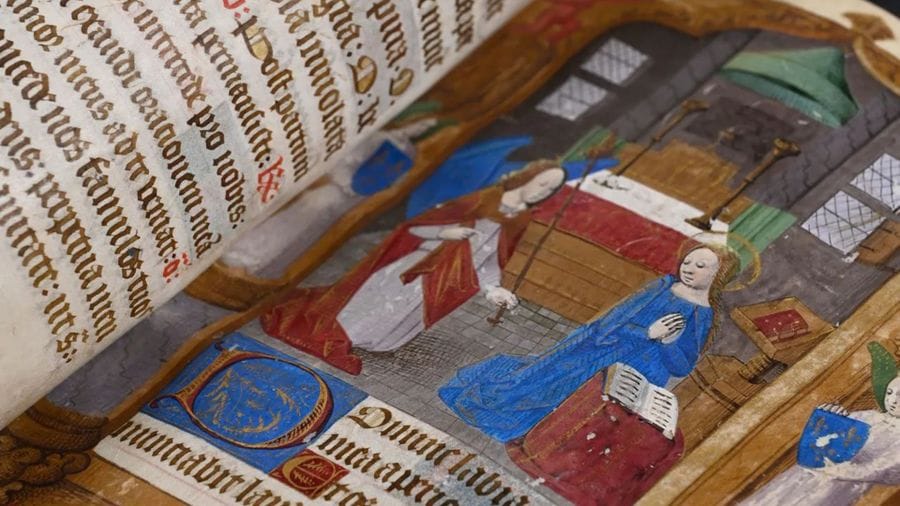
Medieval and Renaissance Treasures to Headline Coutau-Bégarie’s Haute Époque Sale
C outau-Bégarie will present a major sale dedicated to Medieval and Renaissance works of art and curiosity objects at Hôtel Drouot on 20 May. Bringing together more than 200 lots, the auction traces several centuries of European creation, from the Middle Ages to the Renaissance..
Religious sculptures, furniture, manuscripts and devotional objects will form an ensemble in which art history, religious practices and the refinement of period workshops converge. This selection highlights the richness of Medieval and Renaissance art, combining exceptional craftsmanship with the religious imagination of medieval and Renaissance Europe.
One of the highlights of the sale will undoubtedly be lot 35, a remarkable Book of Hours for the Use of Orléans produced in the Loire Valley circa 1480–1490 (estimate: €15,000–20,000). Intended for a woman and written in both Latin and French, this illuminated manuscript contains eight full-page miniatures together with an important group of historiated initials executed by an artist close to the circle of Guillaume Piqueau.
One of the highlights of the sale will undoubtedly be lot 35, a remarkable Book of Hours for the Use of Orléans produced in the Loire Valley circa 1480–1490 (estimate: €15,000–20,000). Intended for a woman and written in both Latin and French, this illuminated manuscript contains eight full-page miniatures together with an important group of historiated initials executed by an artist close to the circle of Guillaume Piqueau.
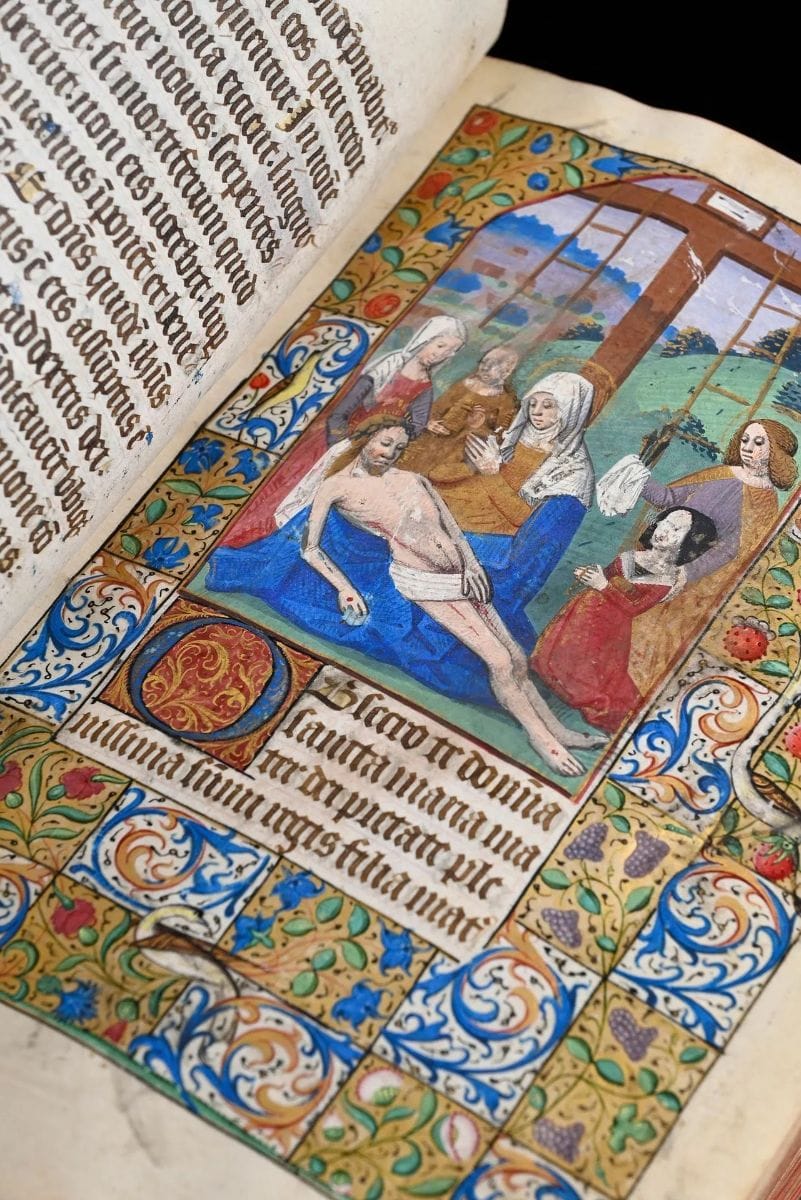
Beyond the quality of its decoration, the manuscript is of particular historical interest through its liturgical calendar, which preserves the memory of several foundational episodes in the history of Orléans. The mention of the Deliverance of Orléans on 8 May directly evokes the end of the siege of 1429 and the figure of Joan of Arc, while the numerous feast days dedicated to Saint Euverte and Saint Aignan reflect the importance of these patron saints within local tradition. Through the richness of its illuminations, the balance of its layout and the finesse of its execution, the manuscript bears witness to the refinement of Loire Valley workshops at the end of the fifteenth century, at a time when Books of Hours embodied both devotion and sophistication.
The sale will also devote significant attention to Renaissance furniture, with several works illustrating the influence of the great Burgundian workshops of the late sixteenth century. Among them is lot 68, a spectacular walnut and oak cabinet decorated with the Cardinal Virtues (estimate: €20,000–30,000), opening with four carved doors painted in gold camaïeu against a black ground. The panels depict Fortitude, Justice, Prudence and Temperance, according to an allegorical vocabulary directly inherited from Renaissance humanism. The cabinet’s abundant ornamentation — term figures, mascarons, paired columns, fruit garlands and architectural pediments — immediately recalls the models published by Hugues Sambin in his celebrated treatise L’Œuvre de la diversité des termes, published in Lyon in 1572.
The sale will also devote significant attention to Renaissance furniture, with several works illustrating the influence of the great Burgundian workshops of the late sixteenth century. Among them is lot 68, a spectacular walnut and oak cabinet decorated with the Cardinal Virtues (estimate: €20,000–30,000), opening with four carved doors painted in gold camaïeu against a black ground. The panels depict Fortitude, Justice, Prudence and Temperance, according to an allegorical vocabulary directly inherited from Renaissance humanism. The cabinet’s abundant ornamentation — term figures, mascarons, paired columns, fruit garlands and architectural pediments — immediately recalls the models published by Hugues Sambin in his celebrated treatise L’Œuvre de la diversité des termes, published in Lyon in 1572.
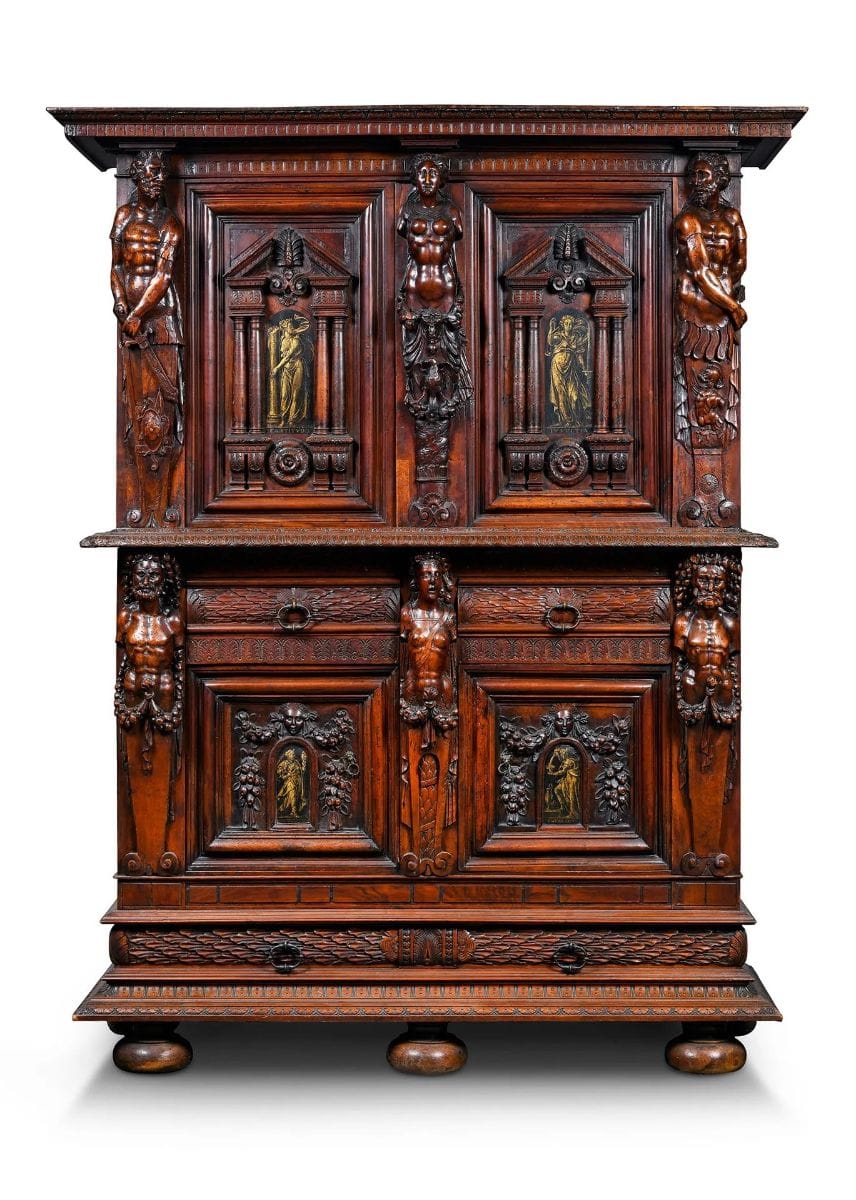
Several technical details, from the alternating use of walnut and oak to the construction methods and gilded highlights on the small columns, closely relate this cabinet to major pieces attributed to Sambin’s circle now held in the collections of the Musée du Louvre and the Getty Museum. Through this monumental work, the dialogue between architecture, sculpture and furniture becomes fully apparent, reflecting a period in which the French decorative arts achieved an exceptional degree of refinement.
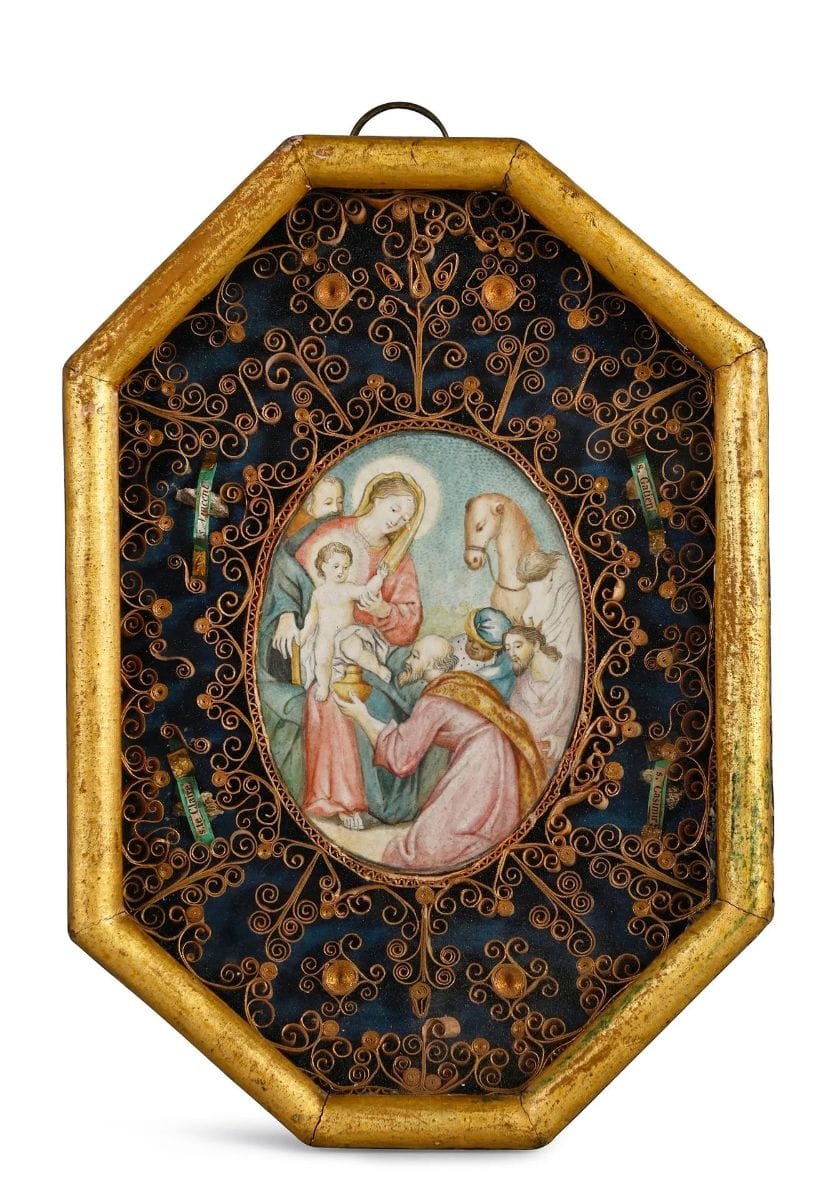
The sale will also feature several important religious sculptures, including a Calvary Virgin in carved oak produced in the Meuse Valley at the end of the thirteenth century (estimate: €10,000–15,000), whose deeply carved drapery and introspective expression convey the elegance characteristic of Mosan sculpture. A similar sensibility appears in a Virgin of Pity carved in Salzburg circa 1380 (estimate: €4,000–6,000), depicting the seated Virgin holding the body of Christ on her lap, according to an iconography that spread widely throughout the Germanic regions at the end of the Middle Ages. Other rarer objects, such as paperolle reliquaries dating from the eighteenth to the early twentieth century, testify to the enduring nature of devotional practices and to the fascination exerted by religious art long after the Renaissance.
The sale will also feature several important religious sculptures, including a Calvary Virgin in carved oak produced in the Meuse Valley at the end of the thirteenth century (estimate: €10,000–15,000), whose deeply carved drapery and introspective expression convey the elegance characteristic of Mosan sculpture. A similar sensibility appears in a Virgin of Pity carved in Salzburg circa 1380 (estimate: €4,000–6,000), depicting the seated Virgin holding the body of Christ on her lap, according to an iconography that spread widely throughout the Germanic regions at the end of the Middle Ages. Other rarer objects, such as paperolle reliquaries dating from the eighteenth to the early twentieth century, testify to the enduring nature of devotional practices and to the fascination exerted by religious art long after the Renaissance.