
From Royal Portraits to Modern Masters: A Journey Through the Centuries at Hôtel Drouot
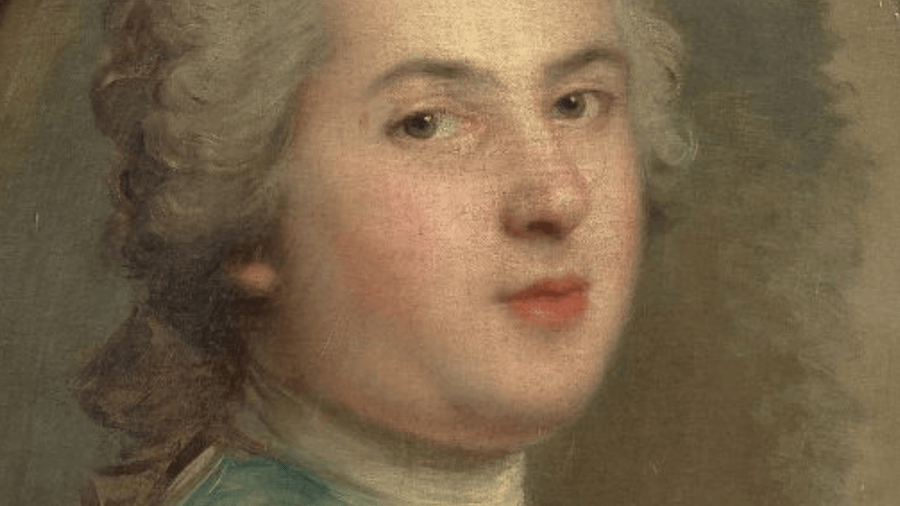
The Return of a Forgotten Prince: A Newly Discovered Portrait of the Dauphin by Nattier
On 20 June, Audap & Associés will open the series with a superb portrait by Jean-Marc Nattier depicting Louis, Dauphin of France and eldest son of Louis XV. Born at the Château de Versailles in 1729, Louis was a devout and pious figure—a stark contrast to his father. He would never ascend the throne, dying prematurely of tuberculosis in 1765 and thus passing the royal fate to his own son, Louis XVI.

A favourite subject of the artist, the dancer allowed Degas to explore the effects of artificial light on movement and form. Here, the black contours outlining the figure capture this tension. More than simple representations, Degas’s dancers are visual snapshots—closer to photography than pure portraiture.
The highlight of the sale is 1.5.62, a 1962 oil on canvas by Zao Wou-Ki, estimated at €400,000 to €500,000. In 1957, inspired by Paul Klee, Zao embarked on a world tour that led him to the US, where he encountered American lyrical abstraction and artists such as Jackson Pollock and Clyfford Still.
During a solo show by Soulages at the Kootz Gallery in New York, Zao was introduced to dealer Samuel Kootz, who offered him an exclusive contract. 1.5.62 was exhibited at Kootz before returning to France in 1967.

Francis Picabia in 18 Works: a Collection Born of Friendship
That same day, Mirabaud-Mercier will present 18 works by Francis Picabia, an extraordinary group that reveals a story of friendship between Gérard Lenoir and Olga Mohler Picabia. In the late 1950s, Lenoir met the artist’s widow in his hair salon, where he worked under the name François. Intrigued by her stories, he began collecting Picabia’s works—acquired either directly from Olga or through her network of dealers and collectors.This ensemble spans a wide range of Picabia’s stylistic phases—although the sheer variety of his œuvre defies full representation, given his refusal to be confined to any single movement.
Picabia studied at the École des Arts Décoratifs from 1895 to 1897 before travelling to Martigues in 1898, where he painted several Impressionist landscapes such as Paysage (est. €6,000–8,000) and Les Martigues (est. €10,000–20,000).

Bold colours and dynamic brushwork characterise these works, rooted in the traditions of the Barbizon school and the likes of Sisley, Monet, and Pissarro. Yet, warned by his grandfather against the limitations of realism, Picabia soon turned to the avant-garde—embracing Pointillism, Fauvism, Cubism, and of course, Dada, before pivoting yet again.
From 1927, he began creating his famed Transparences, drawing on Surrealist ideas and his own inexhaustible imagination. In this return to more figurative and decorative styles, he found wide acclaim. Several works in the collection belong to this captivating series: Transparence (est. €30,000–50,000), Dagelo (est. €100,000–150,000), Nature morte (est. €20,000–30,000), and the standout work, Apollon (est. €120,000–180,000), created in multiple stages—a method Picabia often employed.

Between Light and Abstraction: Degas, Zao Wou-Ki and the Modern Masters

A favourite subject of the artist, the dancer allowed Degas to explore the effects of artificial light on movement and form. Here, the black contours outlining the figure capture this tension. More than simple representations, Degas’s dancers are visual snapshots—closer to photography than pure portraiture.
The highlight of the sale is 1.5.62, a 1962 oil on canvas by Zao Wou-Ki, estimated at €400,000 to €500,000. In 1957, inspired by Paul Klee, Zao embarked on a world tour that led him to the US, where he encountered American lyrical abstraction and artists such as Jackson Pollock and Clyfford Still.
During a solo show by Soulages at the Kootz Gallery in New York, Zao was introduced to dealer Samuel Kootz, who offered him an exclusive contract. 1.5.62 was exhibited at Kootz before returning to France in 1967.

This work marks a shift in Zao’s practice in the early 1960s—a balancing act between everything and nothing. Unseen by the public for over 40 years, it anticipates the artist’s ink works of the 1970s.
The sale also features works by the Giacometti brothers: two rare plaster models of the Flambeau lamp by Alberto (both circa 1934 and recorded in the Giacometti Foundation archives, est. €360,000–400,000), and a Table-berceau, second version, in patinated bronze by Diego.

Modern Art Meets Art Deco
On 23 June, Art Richelieu will present a remarkable collection uniting modern drawings and paintings with exceptional Art Deco furniture. Works by Renoir, Derain and Degas converse elegantly with the refined craftsmanship of Ruhlmann.A master of drawing, Degas is featured with a charcoal and pastel composition dated circa 1889, while Renoir is represented by Nus debout, a graceful charcoal study.

Contemporary to them, Eugène Boudin contributes a luminous seascape, Trouville, les jetées, marée haute. From Camille Pissarro comes Les Laveuses au bord de l’Oise, a touching scene of rural life (est. €25,000–50,000).

The collection continues with 20th-century masters exploring colour and texture. Derain’s Paysage transports viewers to the South of France, while Vlaminck’s Pont sur l’Eure à Pacy showcases his vibrant brushwork.
Seeking a new setting for their growing collection, the owners turned to period furniture of equal quality, acquiring pieces by top Art Deco cabinetmakers. Among the highlights is Jacques-Émile Ruhlmann’s iconic Ducharne cabinet (est. €40,000–80,000) and eight standout works by Eugène Printz, including a striking high chest once owned by the Princess de la Tour d’Auvergne and a minimalist walnut sideboard (est. €30,000–60,000).

Séraphine de Senlis: Grace on the Margins
Finally, in early July, Millon will present a modern art auction headlined by a rare painting by Séraphine Louis, known as Séraphine de Senlis (est. €80,000–100,000). Born in 1864 into a modest family in the Oise, Séraphine had no formal training and painted in secret by candlelight, often drawing on devotional imagery and ornamental motifs, especially plants.A true autodidact, Séraphine is a central figure in what Jean Dubuffet would later call Art Brut. Her talent was discovered by German art dealer Wilhelm Uhde, who supported her and organised the 1929 exhibition Painters of the Sacred Heart in Senlis—earning her the nickname she bears today. That same year, she painted Fleurs, a radiant and poetic tribute to the natural world.


