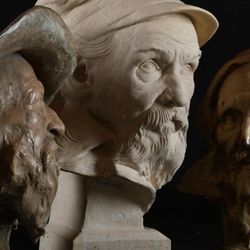
This Week in La Gazette Drouot : Four unpublished busts by Jean Carriès from the house of Auguste Hurtaud
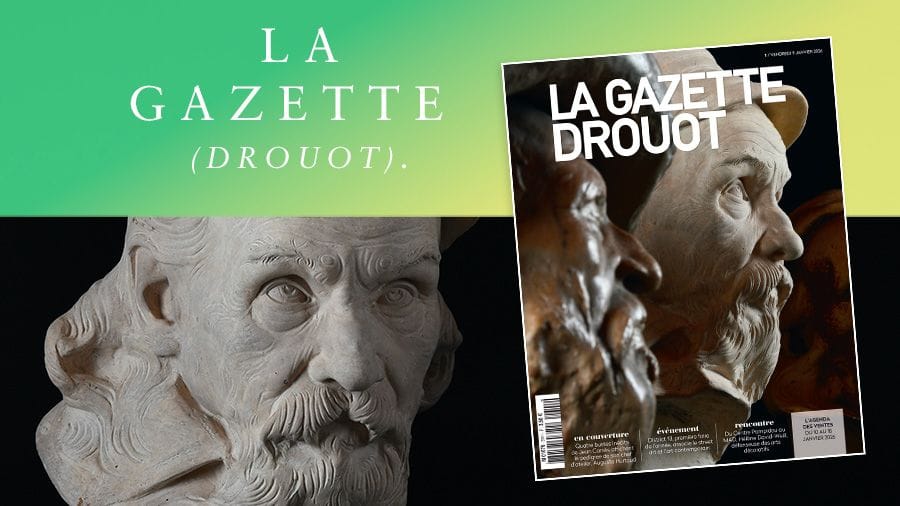
Read the full version of Four unpublished busts by Jean Carriès from the house of Auguste Hurtaud in La Gazette Drouot
Jean Carriès was to make art history through a monumental door. Commissioned in 1889 by the influential patron Winnaretta Singer, Princesse de Polignac, a portico designed to open onto an exhibition room for the manuscript of Parsifal was intended to provide the perfect setting for Wagner's final work. The ambitious sculptor envisaged a construction of no fewer than 700 ceramic bricks depicting various Germanic faunas. A drawing by Eugène Grasset bears witness to this, as do plaster casts and models in the Petit Palais collections.
This technical gamble marked the revival of ceramic art at the end of the 19th century, and established him as one of the first French artists to work in sandstone, a hitherto unconventional material. For him, it was a question of changing scale, and consequently of delegating and opening up his workshop. He entrusted the task of studio manager to Auguste Hurtaud, a plasterer from Saint-Amand-en-Puisaye, whom he asked to set up a team and oversee the installations, the running of the batches and the sampling of the clay.
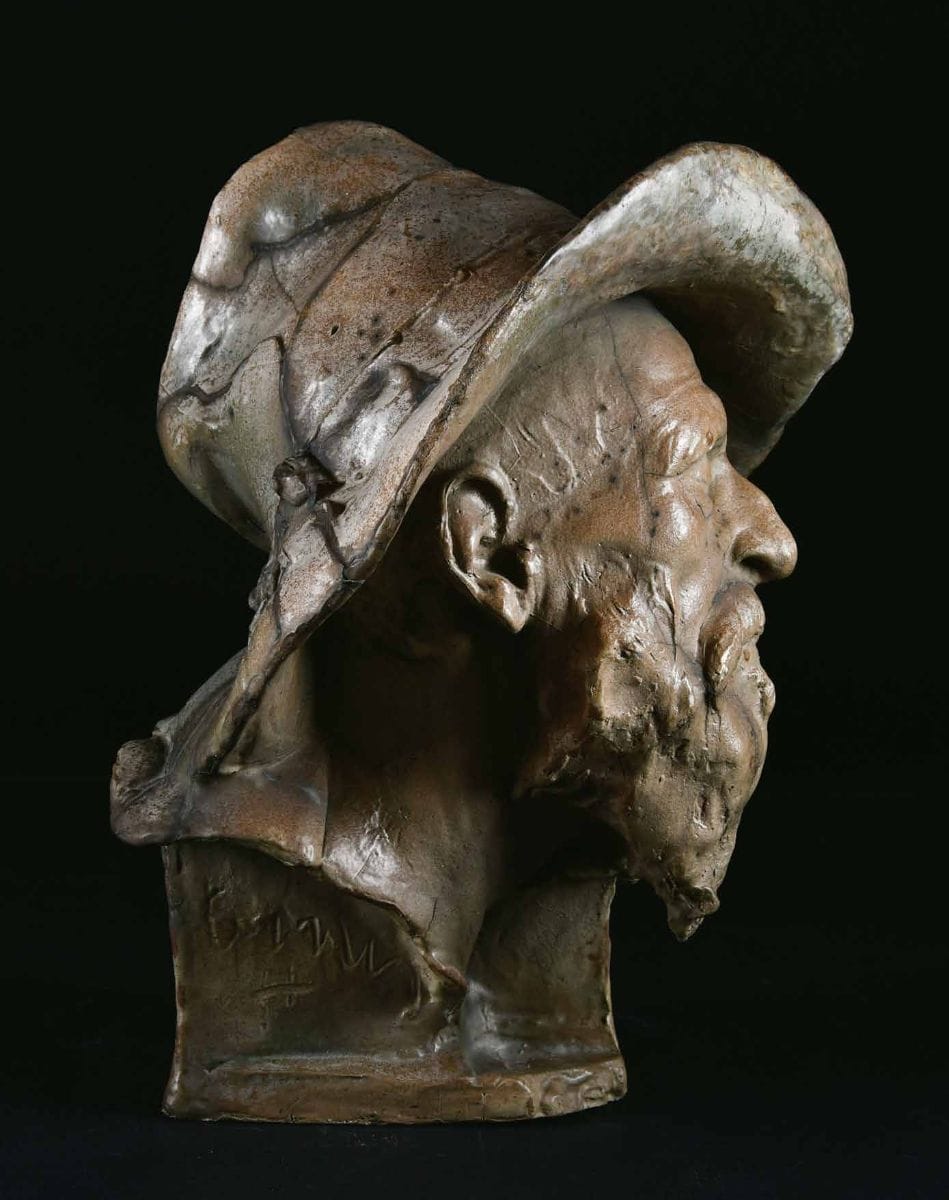
The Puisaye region has been known for its stoneware since the 19th century, a land of forests and water on the banks of the Nièvre, offering every advantage for a pottery business. Jean Carriès settled here in 1888, first at La Bertille and then, when the time came to expand, at Château de Montriveau, where he planned to produce his masterpiece, before being interrupted by health problems and dying, aged just 39. Born in Lyon in 1855, Jean Carriès was orphaned and apprenticed to the sculptor Pierre Vermar. He entered the Beaux-Arts before moving to Paris in 1874, and the following year exhibited his busts for the first time at the Salon. He developed a distinctive style, nourished by his patient observation of the Gothic and his sharp eye for the human figure. He portrayed several nuns, including his sister, herself a novice, who died at the age of 18.
In 1881, his career took off, and art critic Judith Gautier wrote of him: "These busts, or rather these heads (laid flat without pedestal or plinth) are so striking that at first glance you'd think they were cast from life." He achieved a synthesis of realist and symbolist styles, notably through his attention to detail. His busts of historical figures, including Frans Hals, Velázquez and Louise Labé, established his reputation as a sculptor that soon spread beyond our borders.

Discover a world of art and auctions with La Gazette Drouot
You too can enjoy this wealth of information and images by picking up La Gazette Drouot.