THURSDAY, APRIL 10, 2025 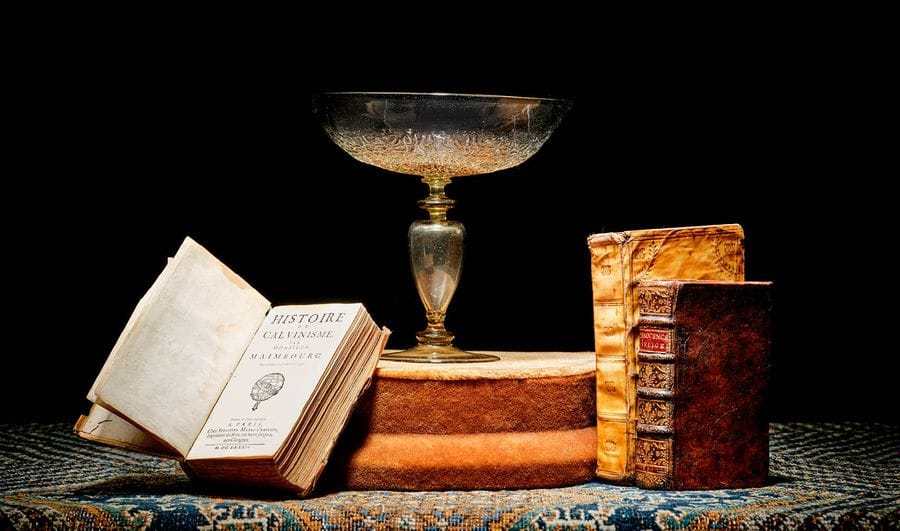
refuge for Protestant soldiers during the period of religious persecution.
Between August 6 and 12, 1561, Calvin left Geneva to support the Reformed communities suffering from the first major waves of persecution. The Château de Poët-Célard, which sheltered Protestant soldiers during this difficult period, was one of his stops. The soldiers, eager to take advantage of the pastor’s presence, wished to renew their oath «to the pure and holy Reformed doctrine.» It was in this context that Calvin celebrated the Lord’s Supper, using this cup as a chalice.
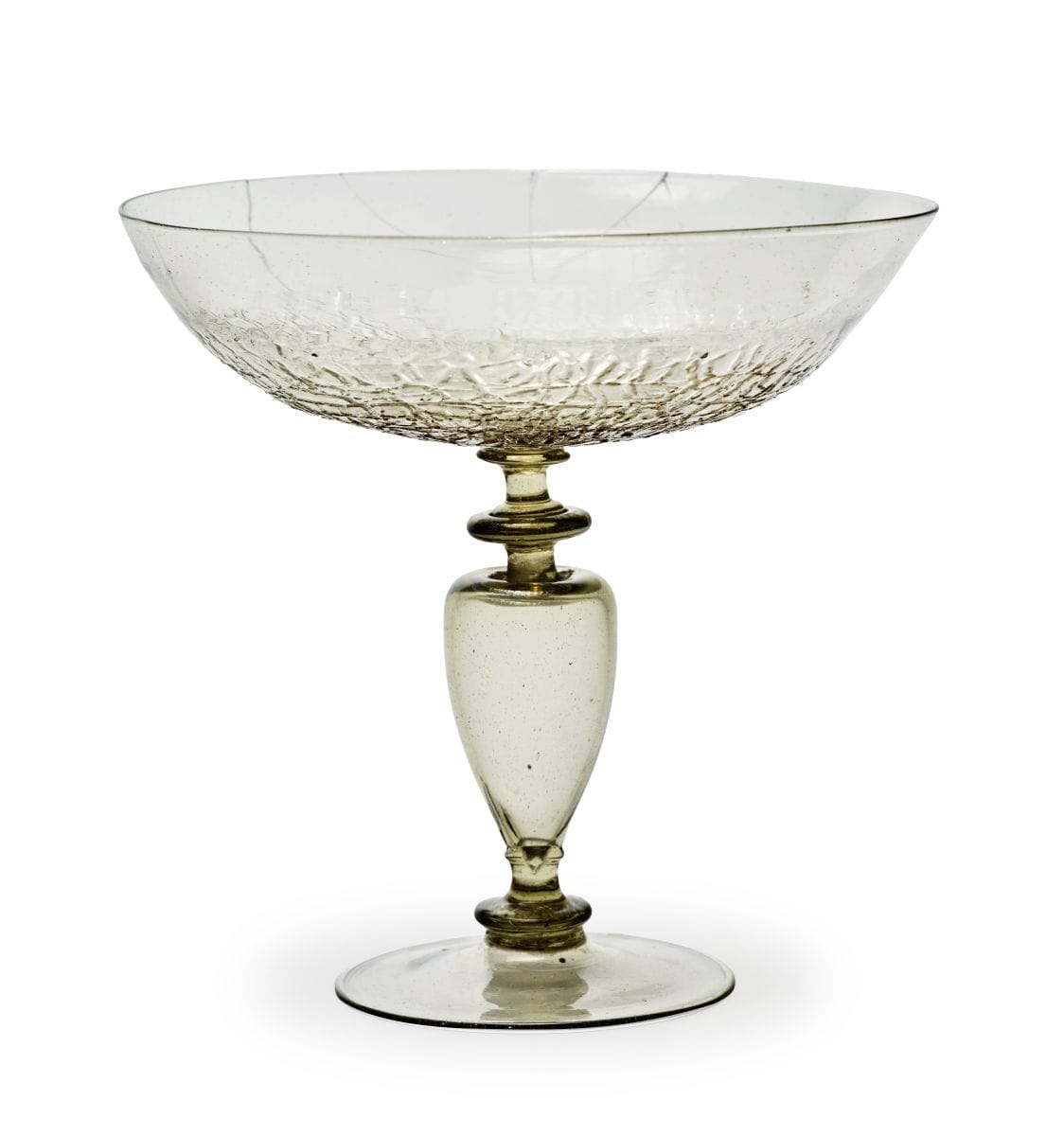
Stemmed glass in slightly yellow-tinted translucent glass
Venice or Venetian style, mid-16th century.
H. 8 cm – D. 8.5 cm
Estimate: €20,000 – €30,000
The Calvin Cup : A Rare Testament to Protestant Persecution during the French Wars of Religion
O n April 10, auction house Tessier & Sarrou, together with expert Benoît Bertrand, will offer for sale at Hôtel Drouot a 16th century glass cup, known as the “Calvin Cup,” used by the pastor to celebrate the Lord’s Supper during his stay in France, in Poët-Célard (Drôme), in August 1561
A major testimony to the history of Protestantism in France
This cup holds significant historical importance due to its role in the history of Protestantism in France, particularly in the Drôme region. It is believed to have been used by John Calvin to celebrate the Lord’s Supper in August 1561, during his stay at the Château de Poët-Célard, arefuge for Protestant soldiers during the period of religious persecution.
Between August 6 and 12, 1561, Calvin left Geneva to support the Reformed communities suffering from the first major waves of persecution. The Château de Poët-Célard, which sheltered Protestant soldiers during this difficult period, was one of his stops. The soldiers, eager to take advantage of the pastor’s presence, wished to renew their oath «to the pure and holy Reformed doctrine.» It was in this context that Calvin celebrated the Lord’s Supper, using this cup as a chalice.
An emblematic work of 16th century Venetian glassmaking
This remarkable piece is characteristic of mid- 16th-century Venetian glassmaking, a period that marked a turning point in glass production. Italian artisans transitioned from sturdy goblets to lighter, almost ethereal glasses of exceptional transparency.
Comparable pieces are preserved in the collections of the Musée des Arts Décoratifs in Paris, including two glasses dating from the third quarter of the16th century.The Museum of Bordeaux also holds a very similar example in its Mesnil collection.
Comparable pieces are preserved in the collections of the Musée des Arts Décoratifs in Paris, including two glasses dating from the third quarter of the16th century.The Museum of Bordeaux also holds a very similar example in its Mesnil collection.
An exceptional provenance, traced back to the 16th century
The cup remained carefully preserved within the same family until the French Revolution. During this period, Pierre Joseph Louis de Blaïn de Marcel, Marquis of Poët-Célard, was threatened by Revolutionary forces. He managed to hide with the help of a confidant, François Descours, to whom he later gifted the cup in gratitude.
It was then passed down to Descours’ only daughter, who married Monsieur de Saulces de Latour. Their daughter later married the renowned pastor Alexis Muston. The couple’s son-in-law, Adolphe Chauvet—also a pastor— then gave the cup to his daughter, Marguerite Chauvet, who married Edouard le Danois. Their daughter Yseult, born in 1920, passed it on to her first cousin, Paul Trouchaud, and subsequently through direct descent.
It was then passed down to Descours’ only daughter, who married Monsieur de Saulces de Latour. Their daughter later married the renowned pastor Alexis Muston. The couple’s son-in-law, Adolphe Chauvet—also a pastor— then gave the cup to his daughter, Marguerite Chauvet, who married Edouard le Danois. Their daughter Yseult, born in 1920, passed it on to her first cousin, Paul Trouchaud, and subsequently through direct descent.
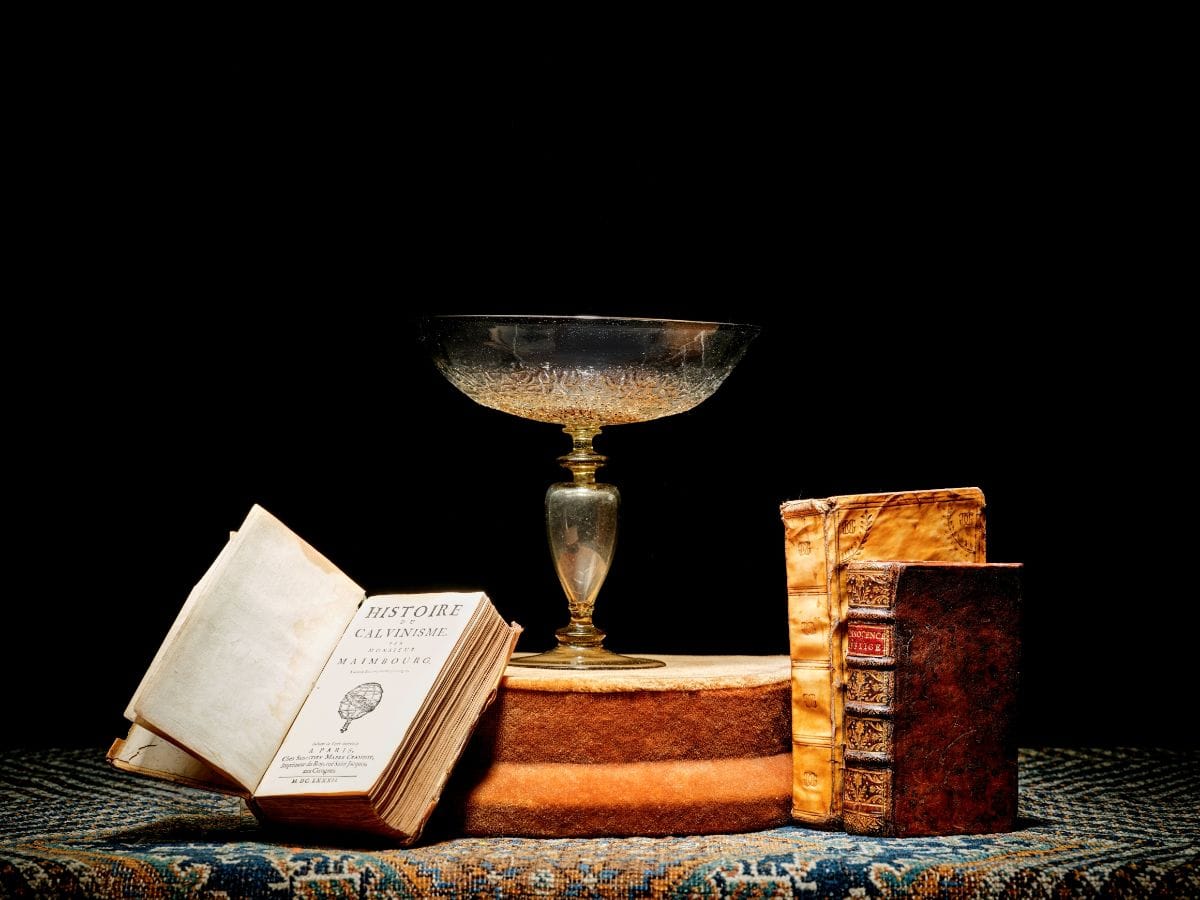
Stemmed glass in slightly yellow-tinted translucent glass
Venice or Venetian style, mid-16th century.
H. 8 cm – D. 8.5 cm
Estimate: €20,000 – €30,000