An Imperial porcelain rediscovered in a French family
Olivier Valmier, associate auctioneer, remarks:
A Forgotten Piece, Preserved Through Generations
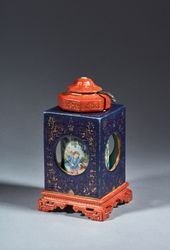
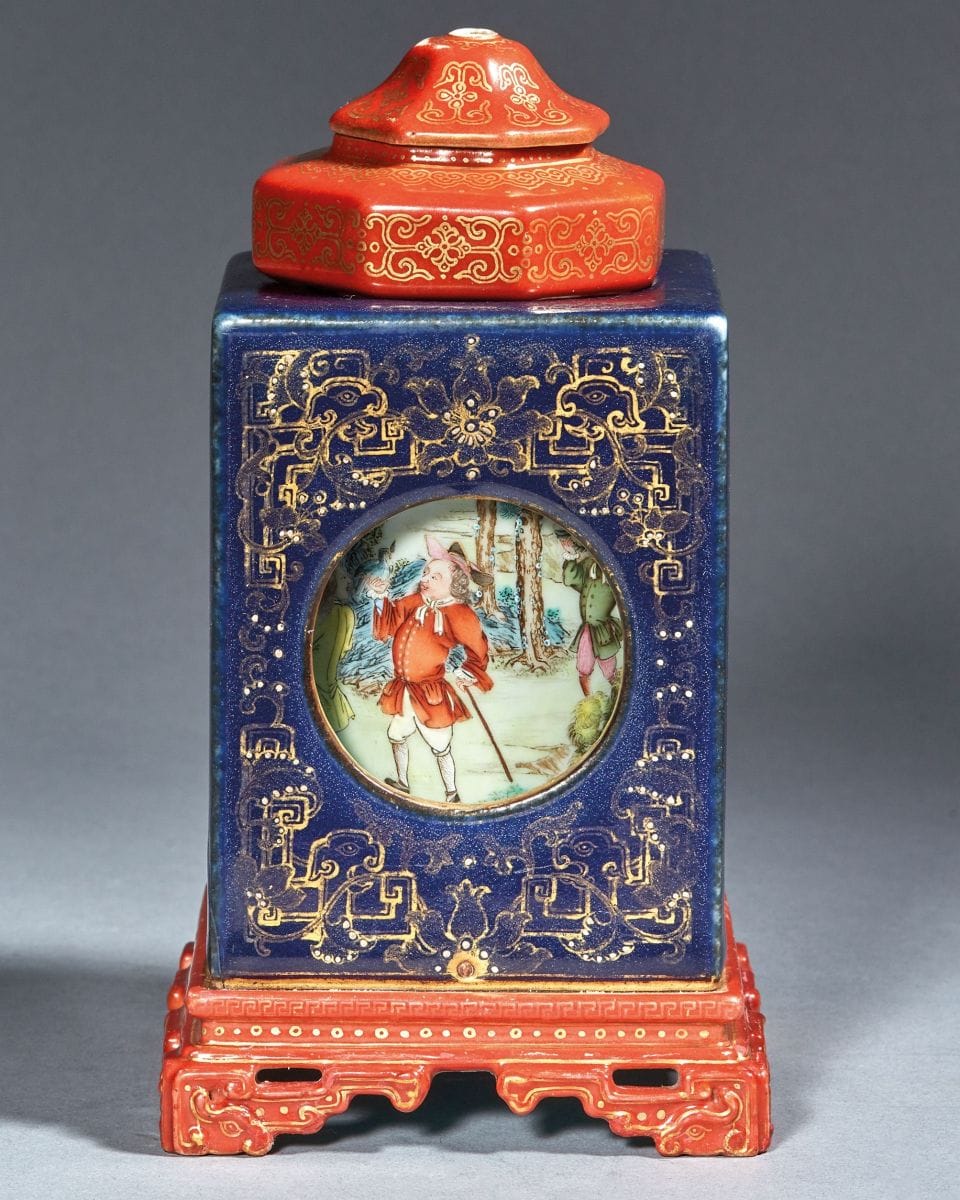
Hidden on a shelf, barely visible behind a book, this porcelain piece has survived the ages away from prying eyes in a French family. During an inventory, its brilliance and extraordinary nature captured the attention of auctioneer Olivier Valmier. This water pot, designed to hold water for diluting ink at the imperial court, stands out for its sophisticated design and ingenious mechanism, testifying to the excellence of Jingdezhen artisans, the famous imperial kilns of China.
A Design Celebrating Diplomatic Exchanges
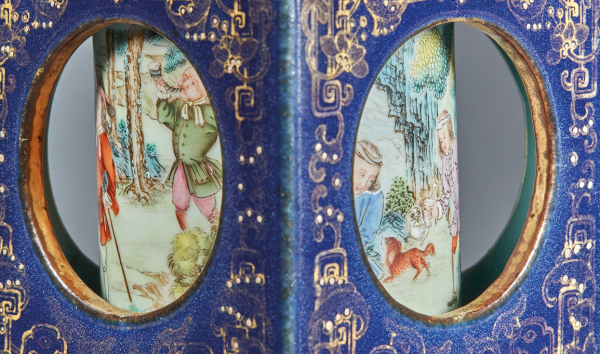
 The decorative motif features foreigners presenting tributes to the emperor, a popular theme since the Tang dynasty (618–907) and still appreciated during the Qing dynasty (1662–1911), particularly by Emperor Qianlong (1735–1796). This type of scene reflects the relationships between imperial China and the rest of the world, marked by trade, diplomacy, and the increasing presence of Western powers in Asia. These carefully chosen tributes carried significant symbolism, asserting the prestige of the giver while honoring the receiver and playing a key role in diplomatic relations.
As the cylinder turns, an almost theatrical animation is revealed: a figure blowing a horn, accompanied by two pugs, followed by six other joyful figures, clearly eager to meet the emperor. Dressed in their finest attire, they proudly bear their gifts: a cup containing the sacred pearl, a pair of pugs, a wrapped present, an elephant tusk, a clock, and a bird.
This object is both a technical and aesthetic masterpiece and a testimony to a pivotal moment in relations between China and the rest of the world.
An Unmatched Technical Feat
The 7th year of Qianlong's reign (1742) marked a turning point in the art of imperial porcelain. Artisans, who had mastered extremely complex techniques, specialized in creating openwork and revolving porcelains. The sophistication of these pieces was so impressive that some contemporaries attributed them to divine or supernatural forces. The following year, in 1743, nine yangcai porcelains with revolving decorations—now preserved in the Forbidden City—were created thanks to the innovative efforts of Tang Ying, who aimed to meet the emperor’s aesthetic demands.
These porcelains consisted of four distinct elements—the base, the inner vase, the body, and the neck—assembled with remarkable precision to allow rotation. They held a privileged place in Qianlong’s collections, who regarded them as treasures worthy of imperial palaces such as the Palace of Heavenly Purity (Qianqing Gong) in the Forbidden City. After Tang Ying's death in 1756, these ingenious creations were never again produced for the imperial court.
Another technical achievement of this period was the imitation of precious materials like hardstones or lacquer using porcelain. This piece exemplifies this mastery: the central square section mimics the deep blue of lapis lazuli, while the base and top replicate the coral-red and orange hues characteristic of lacquer.
With its exquisitely detailed enamel decoration and meticulous small-scale execution, this porcelain is a true artistic marvel. Exceptionally rare, it appears to be a unique piece, with no other known examples to date.