
Published on October 21, by Vanessa Schmitz-Grucker 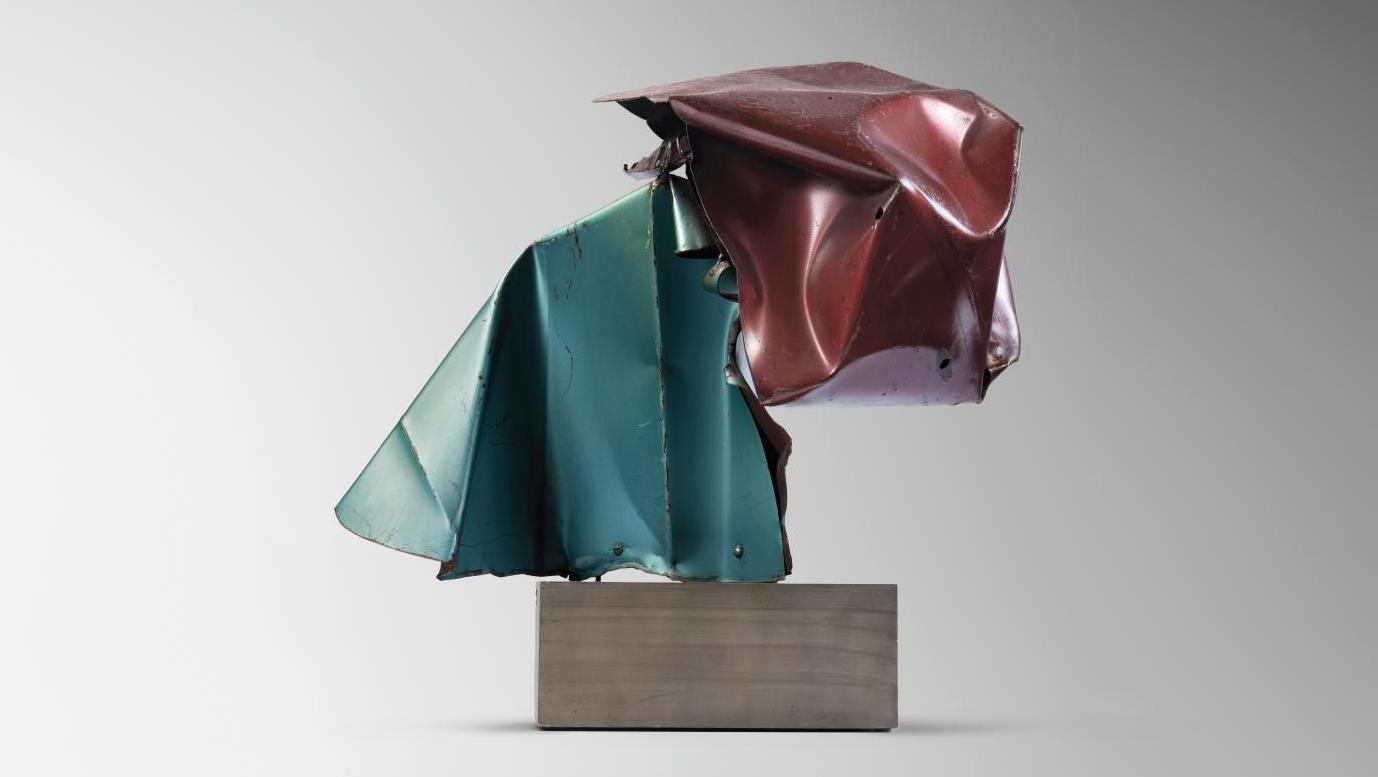
The Robert and Suzanne Pannier Collection
T he collection assembled by the couple, which includes this work by Chamberlain, reveals a strong interest in the artistic explorations of the 1960s and 1970s that redefined the relationships between painting, sculpture, objects, and space.
In *Madison*, created in 1965, John Chamberlain transforms fragments of automobile bodywork into a compact sculpture in which the metal is caught in a compressive force. Sheets of metal painted burgundy red and turquoise blue are bent, crushed, and welded together. Their surfaces retain the traces of these deformations: protruding edges, deep indentations, folds, and abrupt changes in direction. Born in 1927 in the United States, Chamberlain made a name for himself in the 1950s through his use of salvaged parts. In contrast to traditional sculpture, which is based on shaping or carving a material, he worked with elements already shaped by industry. Their preexisting forms partly determined the possibilities for assembly. By using automobile body parts—a symbol of postwar American consumer society— Madison maintains a connection to the imagery of Pop Art, while developing an abstract language all his own. The work
The rest is reserved for Gazette Drouot subscribers. Already subscribed? Log in , and read the full article on the Gazette Drouot website.
Want to read more? Subscribe to Gazette Drouot!
- All the art market news every week in your mailbox... and on all your digital devices!
- Unlimited access to auction results
- All from €10.50 per month!


