
MITTWOCH, 25. NOVEMBER 2026 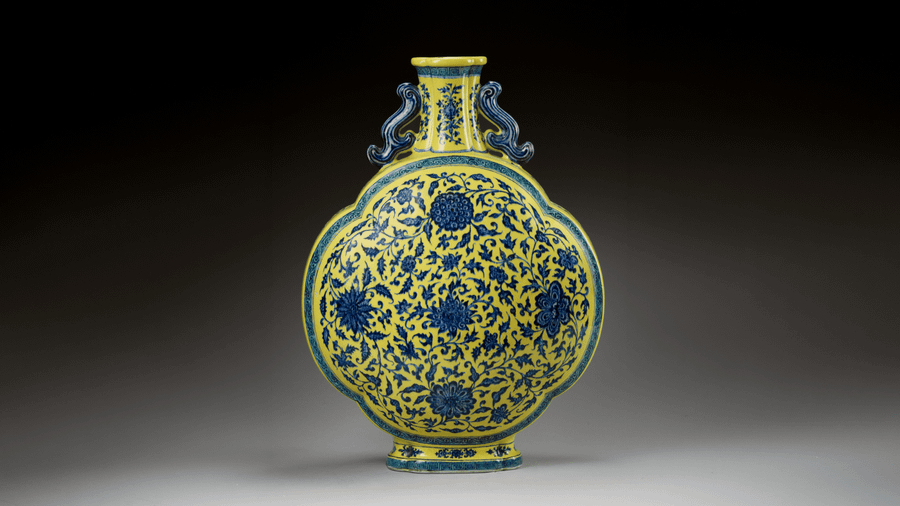
The selection also invites visitors to discover works from other Asian artistic traditions. In Vietnam, Lê Pho’s Elegant Woman at Her Toilette, a 1942 painting on silk, reflects the exchanges between Vietnamese pictorial traditions and Western art. From the collection of Odette Liébaut, daughter of René Robin, Governor-General of French Indochina, the work belongs to Lê Pho’s early period, when he employed the time-honoured technique of painting on silk. Its intimate depiction of women, characterised by fluid, stylised lines, is typical of the artist’s work. Estimated at €100,000–150,000, it will be offered by Mirabaud-Mercier on 1 December.
Another facet of Vietnamese artistic creation is represented by Village in Northern Vietnam, a lacquer panel made in 1953 by Nguyen Kim Dong, estimated at €20,000–30,000 (R&C, 7 December). Nguyen Kim Dong also pursued a career as a teacher and played a key role in passing on the craft of lacquerwork. He became the first head of the lacquer painting department at the Vietnam University of Fine Arts in Hanoi.
Offering another perspective on Vietnam in the early twentieth century, Charles Balencie’s The Scholar depicts an elderly man absorbed in his writing, dressed in traditional attire. Having settled in Indochina in 1896, the painter sought to portray the daily lives of the Annamese people with realism and sensitivity, drawing on his intimate knowledge of their culture. Painted in 1908, this oil on canvas reflects his interest in local figures and scenes of everyday life (estimate: €8,000–10,000, Nicolas Nouvelet, 14 December).
A Journey Through Asian Arts at Hôtel Drouot
F rom 25 to 28 November, Hôtel Drouot will host, in Room 12, a selection of Asian artworks featured in the December auctions. Imperial porcelains, lacquerware, Buddhist sculptures, paintings and prints come together in a journey through several centuries of artistic creation, from ancient China to the Japan of Hokusai and Hiroshige, and on to the arts of Vietnam.
Among the highlights is a large four-lobed porcelain flask bearing the mark of the Yongzheng Emperor and dating from his reign, a testament to the refinement of the wares produced in China’s imperial workshops. Standing nearly 50 cm tall, this rare piece, decorated in blue and yellow with floral scrolls and lingzhi motifs, bears the six-character mark of the Yongzheng Emperor on its base. From the estate of Catherine Laudenbach, it is estimated at €800,000–1,000,000 and will be offered by Beaussant-Lefèvre on 11 December (banner image).
The sale will also feature a rare monochrome pink porcelain bowl, likewise bearing the mark of the Yongzheng Emperor and dating from his reign. It reflects a major turning point in porcelain-making techniques, brought about by exchanges between China and the Jesuits at court. Their arrival contributed to the development of pink enamel, and monochrome porcelain became particularly prized by the Manchu emperors. Two bowls of comparable size are held at the Musée Guimet in the Grandidier collection (estimate: €10,000–15,000).
The sale will also feature a rare monochrome pink porcelain bowl, likewise bearing the mark of the Yongzheng Emperor and dating from his reign. It reflects a major turning point in porcelain-making techniques, brought about by exchanges between China and the Jesuits at court. Their arrival contributed to the development of pink enamel, and monochrome porcelain became particularly prized by the Manchu emperors. Two bowls of comparable size are held at the Musée Guimet in the Grandidier collection (estimate: €10,000–15,000).
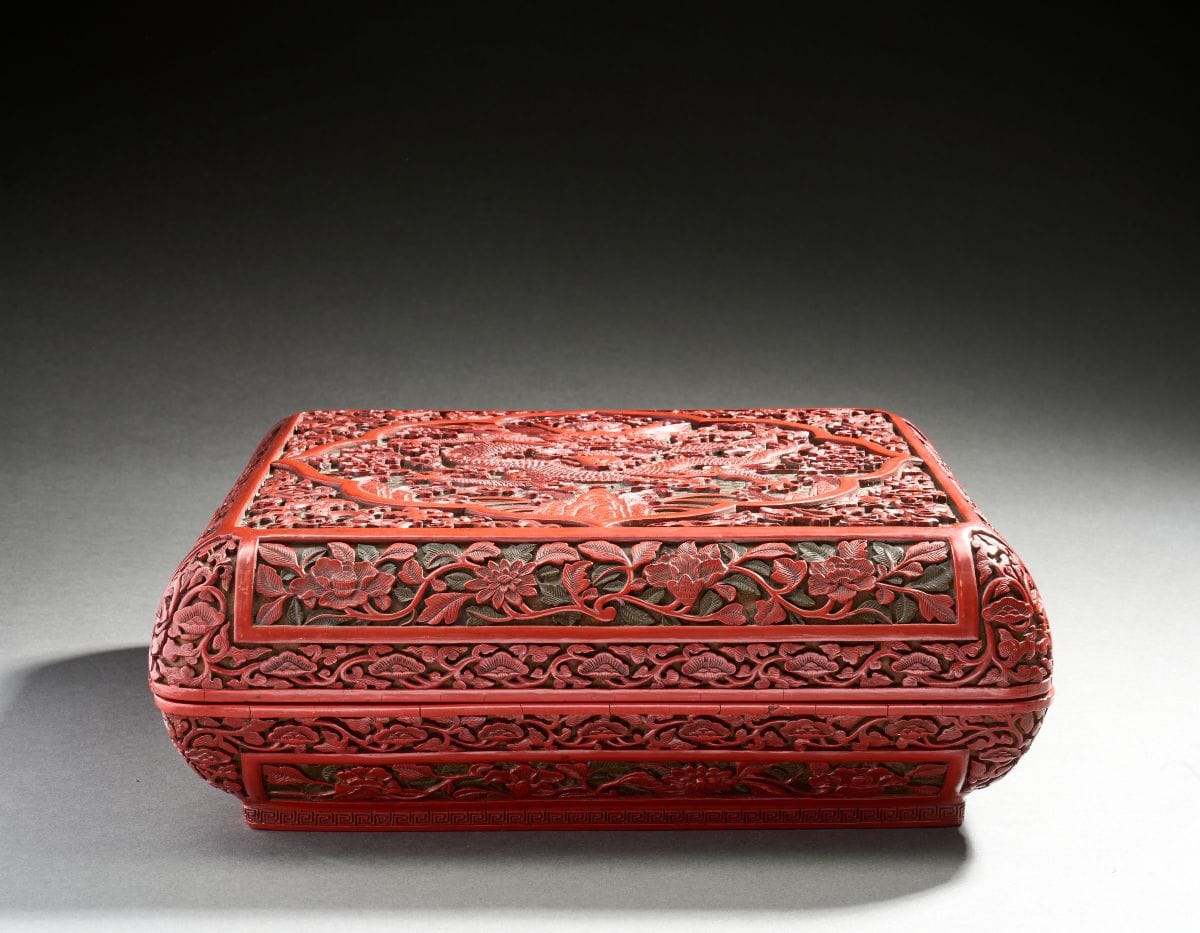
The arts of imperial China are also revealed through more intimate objects, in which technical mastery meets richly detailed decoration. A carved cinnabar lacquer box bearing the mark of the Qianlong Emperor and dating from his reign, adorned with a five-clawed dragon among symbols of prosperity and good fortune, will be offered by Delon-Hoebanx on 10 December (estimate: €15,000–20,000). At Beaussant-Lefèvre, an imposing blue-and-white porcelain jar from the Wanli period, decorated with the “Hundred Deer” motif set in a mountainous landscape, will illustrate the importance of auspicious imagery in Chinese decorative arts (estimate: €8,000–10,000, 11 December). Also noteworthy is a rare Yuan-period lacquer tray, carved in red lacquer with two chilong dragons facing one another above a yellow ground (estimate: €15,000–20,000, Christophe Joron-Derem, 2 December).
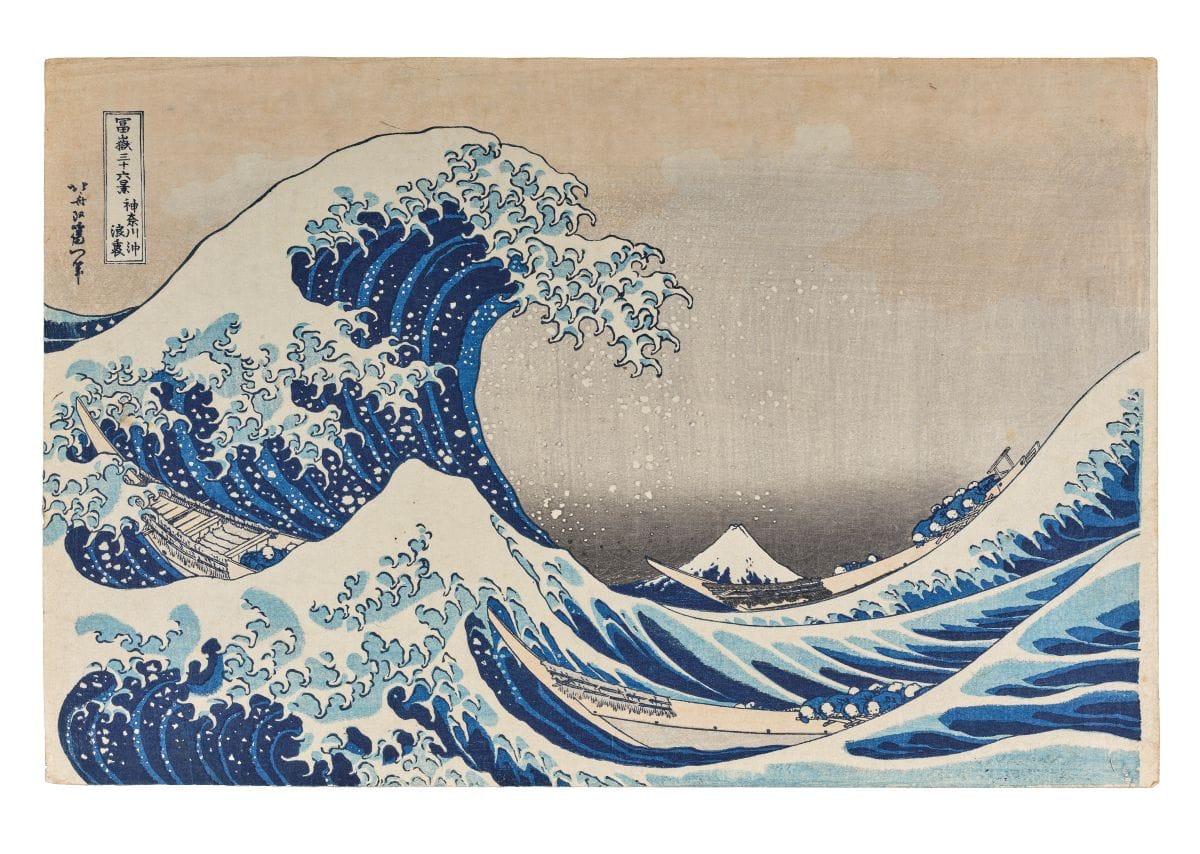
Another major highlight of the selection is Under the Wave off Kanagawa, better known as The Great Wave, one of the most iconic images in Japanese art. Created around 1830–1831 by Katsushika Hokusai, this print from the series Thirty-six Views of Mount Fuji is particularly notable for its use of Prussian blue, a pigment that lends its contrasts their striking intensity. The Great Wave was among the first prints to be produced using this pigment, and this impression is probably one of the earliest examples. Estimated at €500,000–600,000, it will be presented by Audap & Associés on 14 December.
Another major highlight of the selection is Under the Wave off Kanagawa, better known as The Great Wave, one of the most iconic images in Japanese art. Created around 1830–1831 by Katsushika Hokusai, this print from the series Thirty-six Views of Mount Fuji is particularly notable for its use of Prussian blue, a pigment that lends its contrasts their striking intensity. The Great Wave was among the first prints to be produced using this pigment, and this impression is probably one of the earliest examples. Estimated at €500,000–600,000, it will be presented by Audap & Associés on 14 December.
The same sale will also feature Hiroshige, with a complete album from his own version of Thirty-six Views of Mount Fuji. Published in 1858, this late series depicts the famous mountain through landscapes from the different provinces of Japan. More serene in composition and remarkable for their colour harmonies, these views offer a different perspective on a subject that Hokusai had made famous twenty-five years earlier (estimate: €40,000–50,000). The sale will also include Kameido umeyashiki (Plum Garden at Kameido), a print from the series One Hundred Famous Views of Edo that inspired a work by Vincent van Gogh thirty years later, now held at the Van Gogh Museum in Amsterdam (estimate: €30,000–40,000).
The delicacy of Japanese art is evident even in the smallest everyday ornaments, such as netsuke. Two pieces from the Edo period illustrate this tradition: a wooden group signed Masanao depicting the san sukumi – a snake, a toad and a snail – and a charming ivory group showing a buffalo with its calf. The former, recorded in several reference works and formerly in prestigious collections, is estimated at €12,000–15,000; the latter at €5,000–6,000 (Thierry de Maigret, 11 December).
The delicacy of Japanese art is evident even in the smallest everyday ornaments, such as netsuke. Two pieces from the Edo period illustrate this tradition: a wooden group signed Masanao depicting the san sukumi – a snake, a toad and a snail – and a charming ivory group showing a buffalo with its calf. The former, recorded in several reference works and formerly in prestigious collections, is estimated at €12,000–15,000; the latter at €5,000–6,000 (Thierry de Maigret, 11 December).
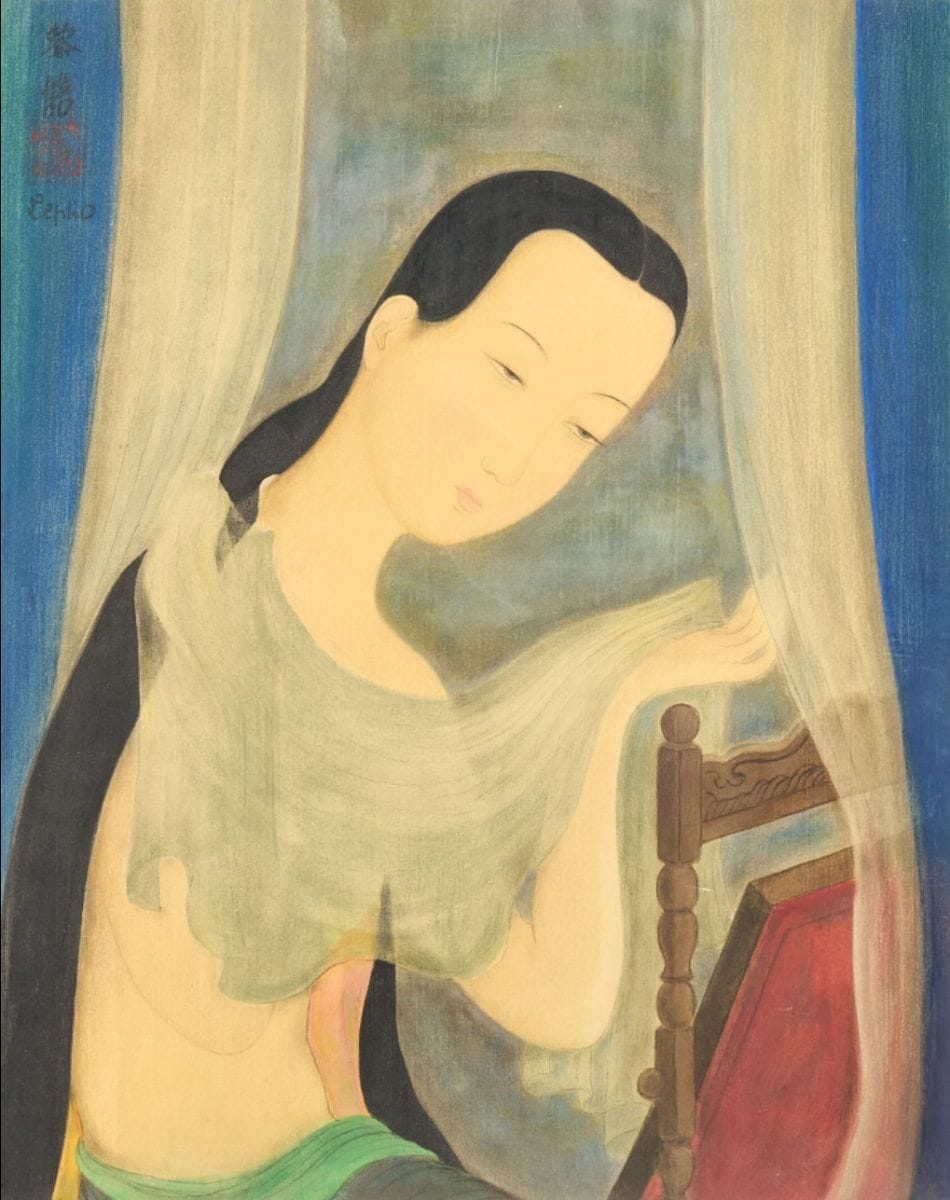
The selection also invites visitors to discover works from other Asian artistic traditions. In Vietnam, Lê Pho’s Elegant Woman at Her Toilette, a 1942 painting on silk, reflects the exchanges between Vietnamese pictorial traditions and Western art. From the collection of Odette Liébaut, daughter of René Robin, Governor-General of French Indochina, the work belongs to Lê Pho’s early period, when he employed the time-honoured technique of painting on silk. Its intimate depiction of women, characterised by fluid, stylised lines, is typical of the artist’s work. Estimated at €100,000–150,000, it will be offered by Mirabaud-Mercier on 1 December.
Another facet of Vietnamese artistic creation is represented by Village in Northern Vietnam, a lacquer panel made in 1953 by Nguyen Kim Dong, estimated at €20,000–30,000 (R&C, 7 December). Nguyen Kim Dong also pursued a career as a teacher and played a key role in passing on the craft of lacquerwork. He became the first head of the lacquer painting department at the Vietnam University of Fine Arts in Hanoi.
Offering another perspective on Vietnam in the early twentieth century, Charles Balencie’s The Scholar depicts an elderly man absorbed in his writing, dressed in traditional attire. Having settled in Indochina in 1896, the painter sought to portray the daily lives of the Annamese people with realism and sensitivity, drawing on his intimate knowledge of their culture. Painted in 1908, this oil on canvas reflects his interest in local figures and scenes of everyday life (estimate: €8,000–10,000, Nicolas Nouvelet, 14 December).

Finally, several works presented by Beaussant-Lefèvre on 17 December illustrate the diversity of Buddhist imagery across Asia. A grey schist head of the Buddha from the Gandhara region, dating from the 2nd–4th centuries (estimate: €3,000–4,000); a 13th-century sandstone head of the Buddha from Thailand (estimate: €5,000–6,000); and a Tibetan bronze statuette of Shakyamuni dating from the 14th–15th centuries (estimate: €4,000–6,000) together demonstrate the variety of styles and materials employed over the centuries. At R&C on 7 December, another notable work is a bronze figure of a Bodhisattva, depicted seated in the posture of royal ease known as lalitasana (estimate: €8,000–12,000).
Alongside these Buddhist sculptures is a repoussé copper face of Bhairava, a wrathful form of the Hindu god Shiva, from Nepal and dating from the 18th century (estimate: €10,000–15,000, Tessier & Sarrou, 8 December).
Bringing together works offered by numerous auction houses, this selection provides an overview of the richness of Asian art, from its imperial traditions to its more distinctive expressions, and offers an invitation to discover the diversity of the auctions taking place at Drouot in December.

annonce 25 November 2026
Marie-Antoinette's Last Known Breast-Shaped Bowl Rediscovered After More than Two Centuries
annonce 26 November 2026
20th-Century Art and the Collection of an Art-Loving Couple at Drouot
annonce 30 November 2026


