FREITAG, 5. JUNI 2026 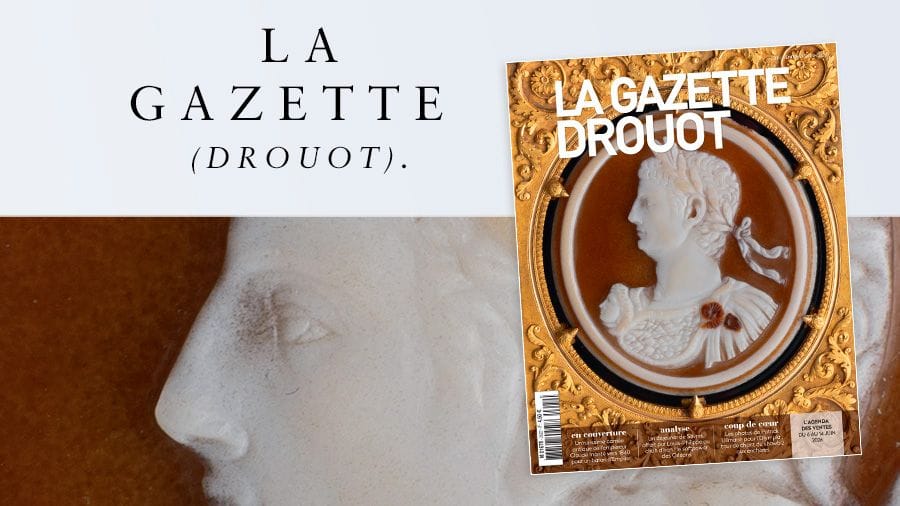
This week in La Gazette Drouot: A Roman cameo by Emperor Claudius: from Antiquity to the 19th century, the story of a masterpiece
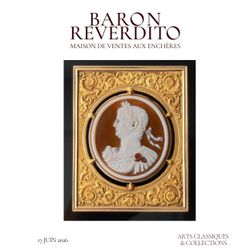
I ts profile is unmistakable. This museum piece combines an exceptionally large Roman cameo from the Julio-Claudian period with a mounting dated circa 1840 by a master of the art, Adrien-Jean-Maximilien Vachette.
By Caroline Legrand
Read the full version of "A Roman cameo by Emperor Claudius: from Antiquity to the 19th century, the story of a masterpiece" in La Gazette Drouot
Some objects you only come across once in your career ," says auctioneer Alexandre Baron-Reverdito. And that meeting took place in a Paris apartment, during an inventory for a family not quite like any other, since it descended from Baron Alfred Octave Roger de Sivry (1806-1874), son of the collector Salomon Louis Roger (1765-1841), a Geneva-born banker who became Baron d'Empire in 1810.
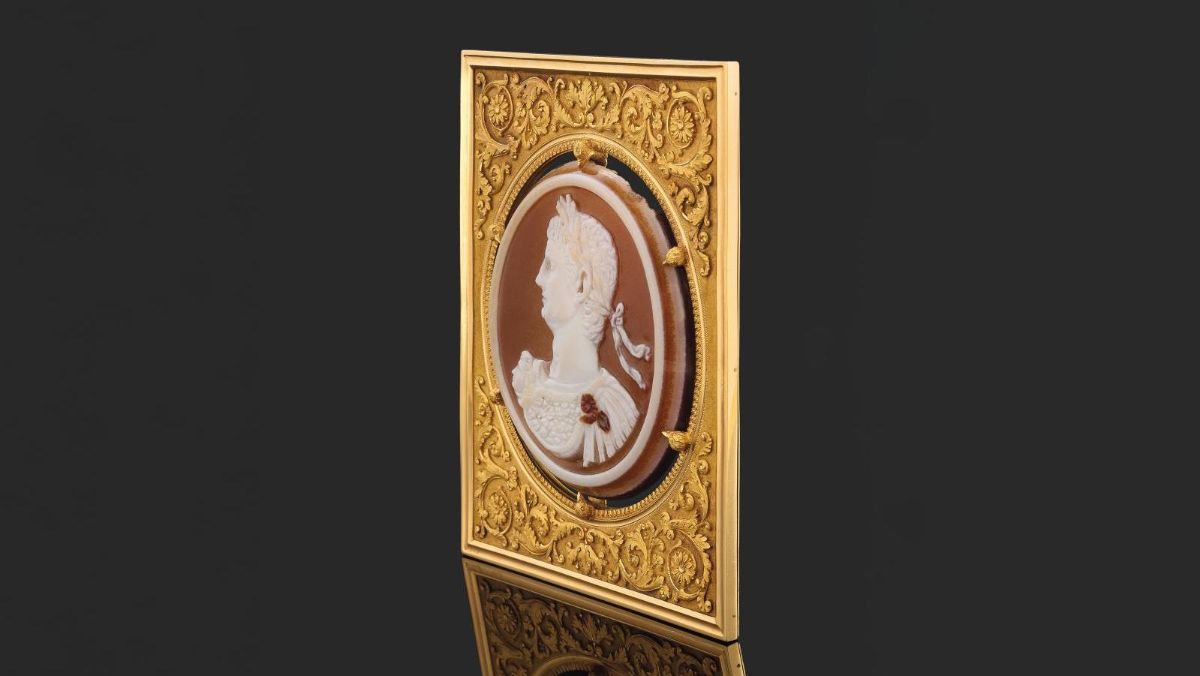
Antoine Tarantino was struck by this precision, as the after-death sale of Baroness Roger de Sivry - held on April 18 and 19, 1904 at Drouot - was a benchmark in the cameo field. The expert in classical archaeology, who for years had been in possession of a photo version of this rare catalog, discovered not only the reproduced cameo, but also an unexpected handwritten note stating that Vivant Denon had claimed in his time that the object was one of those offered to Napoleon I by Pius VI, following the 1797 Treaty of Tolentino.
This information prompted the family to withdraw the object from the sale. Although this imperial - and even papal - provenance remains a hypothesis, it seems plausible, as the baron was perfectly eligible for a gift from the Emperor - he was one of the twenty merchants who financially supported his ascension from the outset.
This information prompted the family to withdraw the object from the sale. Although this imperial - and even papal - provenance remains a hypothesis, it seems plausible, as the baron was perfectly eligible for a gift from the Emperor - he was one of the twenty merchants who financially supported his ascension from the outset.

Discover a world of art and auctions with La Gazette Drouot
Every week, since 1891, La Gazette Drouot has been the authoritative weekly for public auctions of furniture, paintings and objets d'art. Our issues published contain thousands of articles which explain, decipher and analyse objects as well as their market, while others give leading figures a forum for sharing their passion. And not forgetting the cultural news, enlightened by in-depth articles on diverse subjects, often published for the first time.
You too can enjoy this wealth of information and images by picking up La Gazette Drouot.
You too can enjoy this wealth of information and images by picking up La Gazette Drouot.