FREITAG, 16. JANUAR 2026 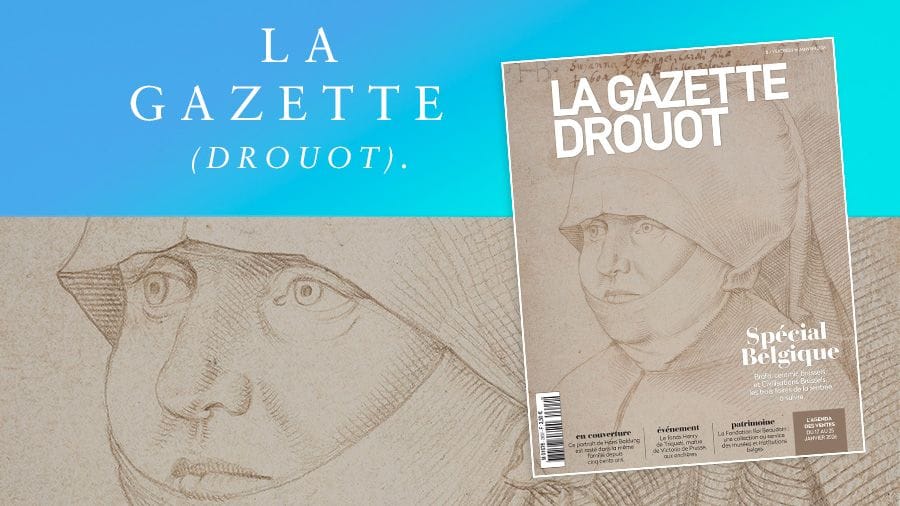
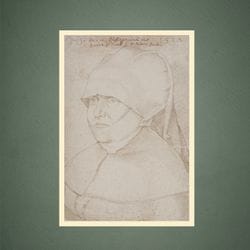
This Week in La Gazette Drouot : Susanna Pfeffinger in silverpoint, a rare Renaissance drawing by Hans Baldung
T hrough the lens of a portrait, a whole section of Strasbourg's vibrant social, economic and religious life at the beginning of the 16th century is brought to life through the prism of women.
By Carole Blumenfeld
Read the full version of Susanna Pfeffinger in silverpoint, a rare Renaissance drawing by Hans Baldung in La Gazette Drouot
Patrick de Bayser, as enthusiastic as ever, finds it hard to conceal his emotion: "Of the 250 or so drawings by Hans Baldung that have been catalogued, only a handful are in private hands. However, our sheet, kept by the model's descendants, is the only known silverpoint portrait in private hands, in addition to those in the Karlsruhe and Berlin museums". The Rue Sainte-Anne expert hesitates, but then says: "If we dared, we could almost say that he surpasses Albrecht Dürer in the finesse with which he uses silverpoint to render variations.
In 1517-1518, Strasbourg experienced a bout of collective fever, culminating in the mysterious "dancing epidemic". On July 15, 1518, a woman named Frau Troffea, seized by an irresistible choreic impulse, began dancing non-stop. Nearly fifty people imitated her, dancing day and night to the point of exhaustion - sometimes even death. The "trance" episode remains famous. Interpretations differ: while many later studies have placed these dances in the trying context of a city hit by famine and plague for three years, one of the most singular hypotheses remains that of the physician Paracelsus, in the second quarter of the 16th century, who saw in them the expression of a feminine revolt aimed at breaking the tyranny of marriage.
Far from the tumult of the streets and the throes of the plague, the figure of Susanna Pfeffinger is just as illuminating for understanding the Strasbourg context and the reasons why the Reformation found a particularly fertile breeding ground among the city's elites. The social weight of the Pfeffinger family in the 16th century was considerable, as evidenced by the Correspondence of Wolfgang Capito, one of the main architects of the local Reformation, which repeatedly mentions members of this family. Susanna's father, mayor and councillor of Sélestat, was senator of the clothmakers in Strasbourg, while her sister Marguerite's husband, also a cloth merchant, accompanied Emperor Maximilian to Rome in 1508. Susanna's husband, Friedrich Prechter the elder, belonged to very close circles.
The son of a cloth merchant and banker from Haguenau, he moved to Strasbourg with his family, probably around 1475. We know from the Revue d'Alsace that by 1490, he was at the head of a trading company with a considerable capital of 17,300 florins, and an active network linking Strasbourg, Frankfurt, Antwerp, Nuremberg, Augsburg and Lyon. His polymorphous trade embraced strategic raw materials as well as intellectual circuits: metals, skins, silks, but also paper destined for the most illustrious printers of the time. A trusted banker to the powers that be, he financed armies, transferred colossal sums between sovereign courts, and served the King of England by paying 10,000 crowns on his behalf to Charles V, to whom he also lent immense sums - in return for mortgages, including one on Hochfelden castle.
Read the full version of Susanna Pfeffinger in silverpoint, a rare Renaissance drawing by Hans Baldung in La Gazette Drouot
Patrick de Bayser, as enthusiastic as ever, finds it hard to conceal his emotion: "Of the 250 or so drawings by Hans Baldung that have been catalogued, only a handful are in private hands. However, our sheet, kept by the model's descendants, is the only known silverpoint portrait in private hands, in addition to those in the Karlsruhe and Berlin museums". The Rue Sainte-Anne expert hesitates, but then says: "If we dared, we could almost say that he surpasses Albrecht Dürer in the finesse with which he uses silverpoint to render variations.
In 1517-1518, Strasbourg experienced a bout of collective fever, culminating in the mysterious "dancing epidemic". On July 15, 1518, a woman named Frau Troffea, seized by an irresistible choreic impulse, began dancing non-stop. Nearly fifty people imitated her, dancing day and night to the point of exhaustion - sometimes even death. The "trance" episode remains famous. Interpretations differ: while many later studies have placed these dances in the trying context of a city hit by famine and plague for three years, one of the most singular hypotheses remains that of the physician Paracelsus, in the second quarter of the 16th century, who saw in them the expression of a feminine revolt aimed at breaking the tyranny of marriage.

Far from the tumult of the streets and the throes of the plague, the figure of Susanna Pfeffinger is just as illuminating for understanding the Strasbourg context and the reasons why the Reformation found a particularly fertile breeding ground among the city's elites. The social weight of the Pfeffinger family in the 16th century was considerable, as evidenced by the Correspondence of Wolfgang Capito, one of the main architects of the local Reformation, which repeatedly mentions members of this family. Susanna's father, mayor and councillor of Sélestat, was senator of the clothmakers in Strasbourg, while her sister Marguerite's husband, also a cloth merchant, accompanied Emperor Maximilian to Rome in 1508. Susanna's husband, Friedrich Prechter the elder, belonged to very close circles.
The son of a cloth merchant and banker from Haguenau, he moved to Strasbourg with his family, probably around 1475. We know from the Revue d'Alsace that by 1490, he was at the head of a trading company with a considerable capital of 17,300 florins, and an active network linking Strasbourg, Frankfurt, Antwerp, Nuremberg, Augsburg and Lyon. His polymorphous trade embraced strategic raw materials as well as intellectual circuits: metals, skins, silks, but also paper destined for the most illustrious printers of the time. A trusted banker to the powers that be, he financed armies, transferred colossal sums between sovereign courts, and served the King of England by paying 10,000 crowns on his behalf to Charles V, to whom he also lent immense sums - in return for mortgages, including one on Hochfelden castle.

Discover a world of art and auctions with La Gazette Drouot
Every week, since 1891, La Gazette Drouot has been the authoritative weekly for public auctions of furniture, paintings and objets d'art. Our issues published contain thousands of articles which explain, decipher and analyse objects as well as their market, while others give leading figures a forum for sharing their passion. And not forgetting the cultural news, enlightened by in-depth articles on diverse subjects, often published for the first time.
You too can enjoy this wealth of information and images by picking up La Gazette Drouot.
You too can enjoy this wealth of information and images by picking up La Gazette Drouot.