FREITAG, 5. DEZEMBER 2025 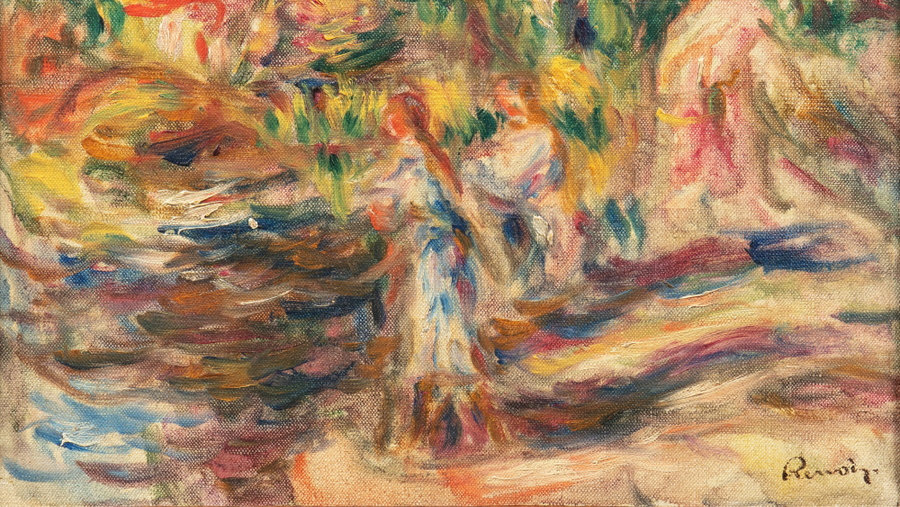
A Restituted Renoir Returns to the Market at Drouot
G iquello will be offering on 5 December at Hôtel Drouot a major painting by Pierre-Auguste Renoir from the former collection of Alfred Weinberger, whose works were seized during the Second World War. This renewed sale follows the restitution of the painting to his heirs.
Seized Works and a Collector Forced into Exile
Alfred Weinberger — a respected expert and art dealer, born on 7 April 1887 in Losoncz, Hungary — had been living in Paris for many years when he was forced to flee the capital at the start of the Occupation, taking refuge in Aix-les-Bains. Before leaving, he deposited several paintings, including five Renoirs, at the Morgan & Cie bank in Paris, believing them to be safe. Despite these precautions, the Nazi authorities seized them shortly afterwards.
The confiscated works were inventoried by the Einsatzstab Reichsleiter Rosenberg (ERR) and transferred to the Jeu de Paume on 4 December 1941, before being sent on to Germany. Bruno Lohse, the Nazi expert in charge of operations, later confirmed that he had inventoried the paintings and overseen their transfer to Germany in 1942 on Göring’s orders.
Renoir’s Laveuse had belonged to Alfred Weinberger since 1925, as confirmed by a letter from the Renou & Poyet gallery (12 May 1958), and came from the artist’s estate. Paysage avec pommiers et femme (31 × 31 cm) appears in the ERR photographic archives held at the Bundesarchiv in Koblenz (Wbg 124). After the war, it was listed under the Weinberger name in the Répertoire des biens spoliés en France (no. 6396).
A Discovery That Sheds Light on the Painting’s History
The painting, first offered at public auction in May 2023*, was discovered during a probate inventory carried out by Giquello. Acquired in good faith by a collector in the 1980s from the Segoura Gallery, the work came with all the standard documentation: a Wildenstein certificate and an export licence issued by the French Museums Directorate.
Yet it was the 2023 buyer who uncovered, through archival research, evidence of its wartime spoliation. Giquello immediately cancelled the sale and began proceedings with a specialised German firm, leading to the restitution of the work to the Weinberger heirs. They have since chosen to entrust its sale once again to Giquello — to be held at Drouot on 5 December.
Yet it was the 2023 buyer who uncovered, through archival research, evidence of its wartime spoliation. Giquello immediately cancelled the sale and began proceedings with a specialised German firm, leading to the restitution of the work to the Weinberger heirs. They have since chosen to entrust its sale once again to Giquello — to be held at Drouot on 5 December.