DONNERSTAG, 26. JUNI 2025 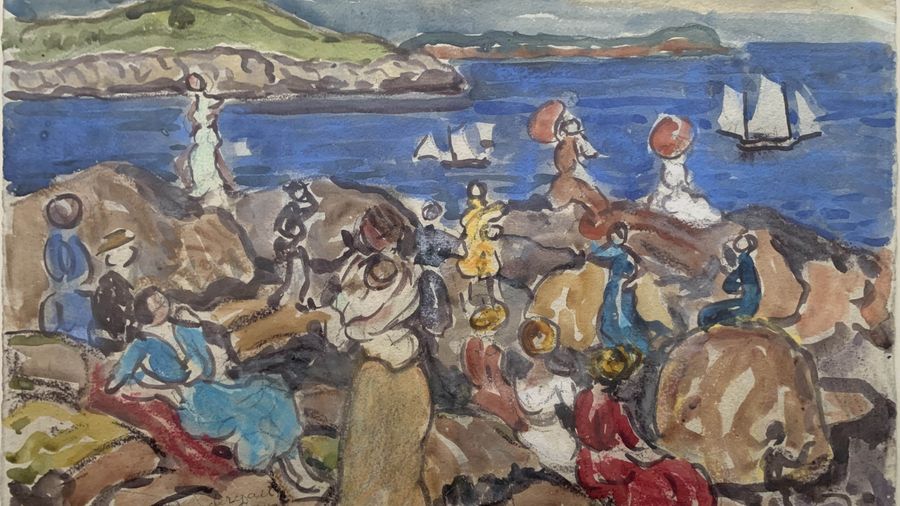
A self-taught artist who began his career painting souvenir cards and shop signs, Maurice Prendergast later trained at the Académie Julian in Paris, where he met Canadian painter James Wilson Morrice. It was Morrice who introduced him to the circle of British avant-garde artists.
From the early 1900s,Prendergast made frequent trips to New York and began gaining recognition through his participation in exhibitions at institutions such as the Art Institute of Chicago and, in 1908, at the Macbeth Gallery in New York. Founded in 1892 by William Macbeth, the gallery rose to prominence that same year with a group exhibition featuring eight artists including Robert Henri, John Sloan and Maurice Brazil Prendergast. Dubbed The Eight by the press, these artists, associated with the Ash Can School—a realist American art movement—expressed their disdain for the mediocrity of the official art establishment and shared a strong enthusiasm for European modernism, particularly the work of Manet.
Although Prendergast embraced the group’s ideology, his style diverged significantly from theirs. Rather than adopting the gritty realism of the Ash Can School, he gravitated toward Post-Impressionism, drawing inspiration from figures such as Paul Cézanne.
In 1914, Prendergast settled permanently in New York, giving up his regular travels to France and Italy in favour of summer stays in New England.
Maurice Prendergast in Watercolour: A Rare Work at Auction
O n 26 June, one of the highlights of the sale presented by Jean-Marc Delvaux will be a magnificent post-impressionist watercolour by Maurice Brazil Prendergast, offered as part of an auction featuring paintings, jewellery, furniture and works of art.
A self-taught artist who began his career painting souvenir cards and shop signs, Maurice Prendergast later trained at the Académie Julian in Paris, where he met Canadian painter James Wilson Morrice. It was Morrice who introduced him to the circle of British avant-garde artists.
From the early 1900s,Prendergast made frequent trips to New York and began gaining recognition through his participation in exhibitions at institutions such as the Art Institute of Chicago and, in 1908, at the Macbeth Gallery in New York. Founded in 1892 by William Macbeth, the gallery rose to prominence that same year with a group exhibition featuring eight artists including Robert Henri, John Sloan and Maurice Brazil Prendergast. Dubbed The Eight by the press, these artists, associated with the Ash Can School—a realist American art movement—expressed their disdain for the mediocrity of the official art establishment and shared a strong enthusiasm for European modernism, particularly the work of Manet.
Although Prendergast embraced the group’s ideology, his style diverged significantly from theirs. Rather than adopting the gritty realism of the Ash Can School, he gravitated toward Post-Impressionism, drawing inspiration from figures such as Paul Cézanne.
In 1914, Prendergast settled permanently in New York, giving up his regular travels to France and Italy in favour of summer stays in New England.
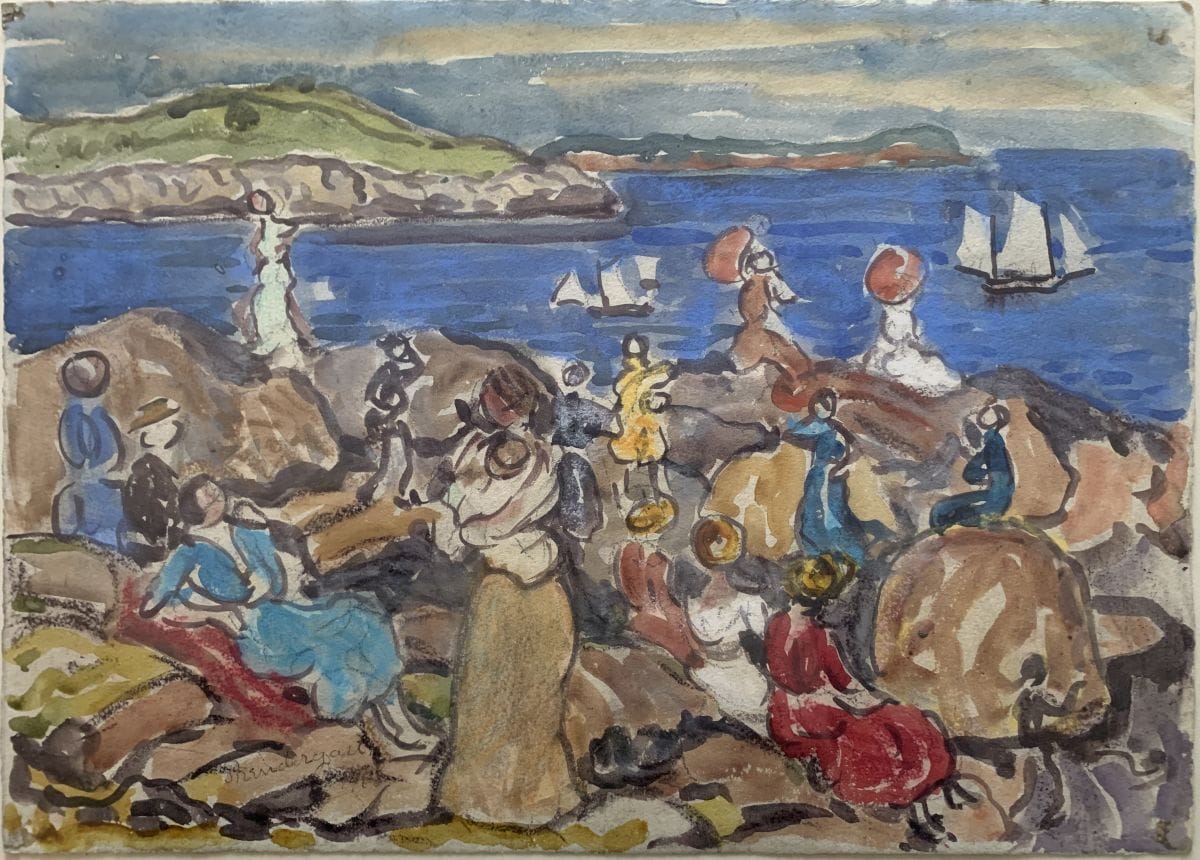
A singular, almost marginal figure in his time, Prendergast is recognised for the density of his compositions, animated by tightly packed crowds, a profusion of detail and vibrant chromatic harmonies. Gloucester, painted in 1918 and estimated at €35,000–45,000, perfectly encapsulates the artist’s world, centred on scenes of daily life and seaside leisure. While he occasionally worked in oil, watercolour remained his preferred medium.