
VENERDÌ 6 FEBBRAIO 2026 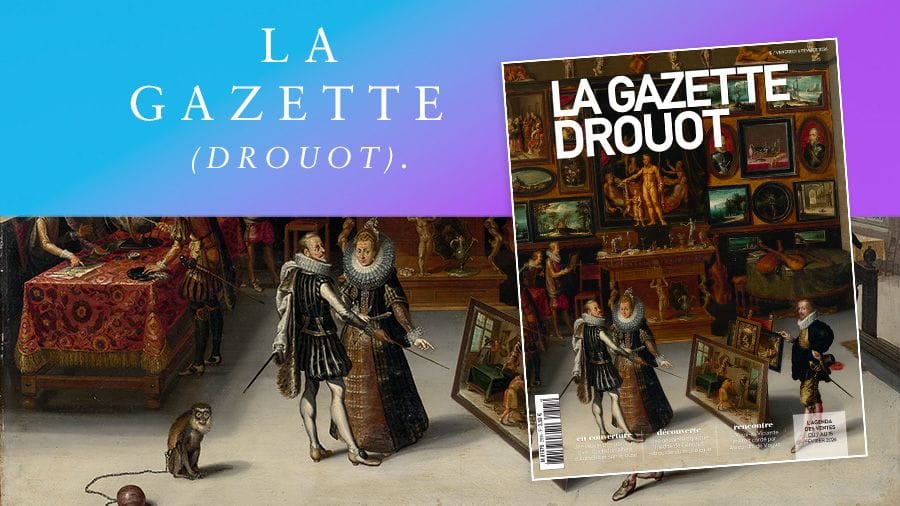
This Week in La Gazette Drouot : Albert of Austria and Isabella: an unpublished political work by Adriaen Van Stalbemt
T his new work, which follows on from the paintings in the Prado and the Walters Art Museum, is sure to inflame passions, especially as it celebrates the eldest granddaughter of Charles V and the grandson of Ferdinand I.
By Carole Blumenfeld
When first cousins Albert of Austria and Isabella of Spain married in 1598, the archduke was already governor of the Netherlands, which his wife brought as a dowry. A large part of their reign was devoted to the fight against Calvinist aspirations, a theme to which one of the iconographic motifs in the painting brought to light by expert Stéphane Pinta refers.
Like the Prado painting Les Sciences et les Arts, or the Walters Art Museum's The Archdukes Albert and Isabella Visiting a Collector's Cabinet, the protagonists' attention is focused on a painting depicting the destruction of works of art by Protestants half a century earlier. From then on, the real subject - this "painting within a painting" - is indeed Albert and Isabella's protective role towards the arts in the Spanish Netherlands.
This intention sheds light on the Habsburgs' appetite for depicting themselves in amateur cabinets, emblematic places of a threatened and safeguarded cultural order. The nicknames of the Archduke - the Pious - and the Archduchess - "Isabel de la Paz" (Isabella of Peace) - were thus earned through their victories, such as the Twelve-Year Truce (1609-1621), but also through the influence of the arts around them.
Unlike such rare works as The Cabinet of Cornelis Van der Geest in Antwerp, 1628 (Antwerp, Rubenshuis), or the laterArchduke Leopold-Guillaume in his Gallery, 1651 (Vienna, Kunsthistorisches Museum), many of the works depicted in the painting remain difficult to identify, although it is possible to recognize stylistic filiations.
Read the full version of Albert of Austria and Isabella: an unpublished political work by Adriaen Van Stalbemt in La Gazette Drouot
When first cousins Albert of Austria and Isabella of Spain married in 1598, the archduke was already governor of the Netherlands, which his wife brought as a dowry. A large part of their reign was devoted to the fight against Calvinist aspirations, a theme to which one of the iconographic motifs in the painting brought to light by expert Stéphane Pinta refers.
Like the Prado painting Les Sciences et les Arts, or the Walters Art Museum's The Archdukes Albert and Isabella Visiting a Collector's Cabinet, the protagonists' attention is focused on a painting depicting the destruction of works of art by Protestants half a century earlier. From then on, the real subject - this "painting within a painting" - is indeed Albert and Isabella's protective role towards the arts in the Spanish Netherlands.

This intention sheds light on the Habsburgs' appetite for depicting themselves in amateur cabinets, emblematic places of a threatened and safeguarded cultural order. The nicknames of the Archduke - the Pious - and the Archduchess - "Isabel de la Paz" (Isabella of Peace) - were thus earned through their victories, such as the Twelve-Year Truce (1609-1621), but also through the influence of the arts around them.
Unlike such rare works as The Cabinet of Cornelis Van der Geest in Antwerp, 1628 (Antwerp, Rubenshuis), or the laterArchduke Leopold-Guillaume in his Gallery, 1651 (Vienna, Kunsthistorisches Museum), many of the works depicted in the painting remain difficult to identify, although it is possible to recognize stylistic filiations.

Discover a world of art and auctions with La Gazette Drouot
Every week, since 1891, La Gazette Drouot has been the authoritative weekly for public auctions of furniture, paintings and objets d'art. Our issues published contain thousands of articles which explain, decipher and analyse objects as well as their market, while others give leading figures a forum for sharing their passion. And not forgetting the cultural news, enlightened by in-depth articles on diverse subjects, often published for the first time.
You too can enjoy this wealth of information and images by picking up La Gazette Drouot.
You too can enjoy this wealth of information and images by picking up La Gazette Drouot.



